

Benefits of Therapy for Men: What You Actually Gain
The Conversation Men Are Still Avoiding Let’s be honest. When most men hear the word therapy, they don’t immediately think, “That sounds like a good

Construction is one of the most physically demanding and hazardous industries in the world. The long hours, heavy workloads, high-risk environments and constant pressure to meet deadlines can take their toll on anyone, regardless of how experienced or resilient they may be.
We have become very good at talking about the physical risks. If somebody walks onto site without the right PPE, works near an exposed live cable or uses unsafe equipment, people notice. There are procedures, risk assessments and reporting systems designed to prevent somebody from getting hurt. Yet when the warning signs are mental or emotional, they are much easier to miss. Somebody can still turn up, put their boots on, crack jokes and get the job done while struggling underneath it all.
Behind the hard hats and heavy machinery, there is a growing mental health crisis that cannot continue to be pushed aside. If we genuinely care about safety, mental health has to be treated with the same seriousness as physical health. Ordinary difficult days will always exist but the person doing the job matters just as much as the job itself.
Research from the Chartered Institute of Building, known as the CIOB, shows how sharply mental health challenges increased across the construction sector between 2020 and 2025. These figures give us a clear picture of a workforce under growing strain.
Stress increased by 19%.
Anxiety increased by 27%.
Depression increased by 10%.
Fatigue increased by 14%.
Irritability increased by 19%.
Poor concentration increased by 30%.
Lack of self-confidence increased by 21%.
Feeling overwhelmed increased by 16%.
Suicidal thoughts increased by 7%.
The rise in poor concentration is particularly important in an industry where judgement, awareness and decision-making can affect everybody’s safety. Fatigue, anxiety and feeling overwhelmed do not remain separate from the work. They can influence how somebody communicates, how they respond under pressure and whether they notice the small detail that prevents an accident.
94% experienced stress.
90% felt fatigued.
86% reported poor concentration.
83% experienced anxiety.
82% felt overwhelmed.
60% experienced depression.
27% had suicidal thoughts.
It is easy to read percentages and move on, especially when we see construction statistics so often. These numbers represent real people: the electrician sitting in the van before the next job, the labourer who has stopped joining the team at lunch, the site manager answering emails late at night and the subcontractor worried about whether there will be enough money to pay everybody on Friday.
According to the Office for National Statistics, male construction workers are three to four times more likely to die by suicide than the national average. Around 700 lives are lost each year to suicide in construction for an industry built on teamwork, strength and problem-solving, that represents a devastating human cost. These are people with partners, children, parents, friends and colleagues whose lives are changed forever.
The CIOB research identified several pressures contributing to poor mental health across the industry:
69% reported having too much work.
65% struggled with poor communication.
64% faced unrealistic deadlines.
64% cited poor planning.
60% pointed to inadequate staffing.
What stands out is how many of these pressures come from the way work is organised. They are not simply personal problems that workers are expected to manage quietly. Poor planning creates rushed programmes. Inadequate staffing places more responsibility onto fewer people. Unrealistic deadlines encourage longer hours and skipped breaks, while poor communication leaves people dealing with problems they may not have created and were never given enough information to prevent.
Construction workers also face financial insecurity, irregular work, hazardous conditions, long shifts, night work and inconsistent management. Project-based work can mean constantly moving between sites, teams and locations. Remote projects may keep workers away from their families and usual support networks for days or weeks at a time. Overtime and weekend work reduce time for rest, recovery and the relationships that normally help people stay grounded.
Physical exhaustion plays a role too. Construction can leave people living with fatigue, injuries and chronic pain. When somebody is already exhausted physically, dealing with pressure, conflict or worries at home becomes harder. The different parts of life do not stay neatly separated. Work follows people into the van and through the front door, just as personal worries come onto site with them in the morning.
Stress does not look the same in everybody. One person may become quiet and withdrawn, while somebody else becomes irritable, impatient or more argumentative. A normally organised person may start forgetting things. Somebody who takes pride in their work may lose motivation or struggle to concentrate. Others may continue performing at a high level while feeling completely exhausted inside.
Anxiety is also common across construction. It can grow from job instability, health and safety concerns, a lack of control over working conditions or conflict on site. Persistent worry can affect concentration, decision-making and relationships, all of which matter in an industry where people depend on one another to work safely. Anxiety can also create a constant feeling of waiting for something to go wrong, even when the working day has ended.
The difficult part is that many of these changes can be dismissed as somebody having a bad attitude or failing to cope. Curiosity gives us a better starting point. Instead of immediately deciding that somebody is lazy, difficult or unreliable, we can ask what has changed and whether something else may be happening underneath the behaviour.
Burnout has become one of the biggest concerns facing construction workers. It grows when pressure continues for too long without enough opportunity to rest, recover or regain a sense of control. It can leave somebody physically exhausted, emotionally detached and increasingly cynical about work they may once have enjoyed.
Common signs can include reduced professional effectiveness, a lack of motivation, difficulty concentrating, emotional numbness, physical exhaustion and feeling disconnected from colleagues or the job itself. Somebody may still turn up and complete their work, but everything begins to require more effort than it once did.
The effects can spread across the whole business through absence, high staff turnover, mistakes and declining work quality. The personal cost can be even greater, especially when burnout sits alongside depression, financial strain, isolation or other mental health struggles. The Lighthouse Construction Industry Charity notes that more than a third of calls to its helpline come from workers experiencing anxiety and depression linked to overwork and financial pressure.
Male construction workers are nearly three times more likely to die by suicide than the UK average. There is no single explanation for that. The crisis has grown from a mixture of high job stress, insecurity, limited access to support and a culture where vulnerability can still be viewed as weakness.
Construction is a male-dominated industry and many men have grown up believing that strength means handling everything alone. On site, that can be reinforced through banter, fear of judgement and the old-school attitude of “get the job done and don’t complain”. People may worry that speaking honestly will damage their reputation, affect future work or cause others to see them differently. By the time somebody finally asks for help, they may have been struggling privately for months or even years.
This is why simply telling people to speak up is never enough. We also need to look at what happens after somebody speaks. Are they listened to? Is the conversation confidential? Will they be supported or quietly treated as a problem? Trust is built through what leaders and colleagues do after somebody tells the truth.
Alcohol and drugs can become ways of coping with long hours, stress, pain, loneliness or difficult emotions. What begins as a drink after work or a way of joining in with the team can gradually become something a person relies on to switch off, sleep or get through the week.
Substance misuse can impair judgement and coordination, increase accident risk, worsen anxiety and depression and create a dependency that makes recovery more difficult. Employers need to respond with more than judgement or punishment. Addiction can be a sign that somebody has been trying to cope with deeper problems without the right support. Education, confidential help and access to specialist services give people a better chance of addressing the cause as well as the behaviour.
Having spent over 14 years in construction, I have witnessed the hard work and dedication of the people in this industry first-hand. These are people who wake before dawn, work in freezing winters and unbearable summer heat and regularly stay late to get a job over the line. They solve complicated problems with limited time and resources, often while carrying pressure that nobody else sees.
Yet mental health has not always been treated with the same respect. I have heard genuine struggles turned into jokes and seen vulnerability treated as though it proves somebody cannot handle the job. For years, the message was simple: crack on, keep your head down and do not complain. That attitude may keep a project moving for another day but it does nothing to address what the person is carrying.
One memory has always stayed with me. I had finished a particularly dirty job and was carrying my lunch towards the lift when a manager stopped me. He told me to get out because I was too dirty, even though I had become covered in grime completing a task I had been assigned. I was forced to walk up eight flights of stairs and then eat in a windowless, unheated room filled with industrial equipment.
At the time, I was furious. The message felt clear: as a contractor, I did not belong in the spaces meant for everybody else. We were expected to remain invisible, avoid the lifts, stay away from the main entrance and appear only when somebody wanted the work done. Years later, I can see that the incident represented something much bigger than taking the stairs. It reflected the way contractors and construction workers can be treated as a resource instead of people.
When somebody is made to feel invisible day after day, it affects more than morale. It changes trust, belonging and whether they believe anybody will care when something is wrong. Respecting people does not require a new policy or a large wellbeing budget. Sometimes it begins with how we speak, where people are allowed to eat and whether everybody on the project is treated with basic dignity.
Construction has made enormous progress in technology and physical safety but mental health support has not always kept pace. Wellbeing needs to become part of everyday site culture and continue long after the awareness week posters come down.
That change has to be visible in daily behaviour. Senior leaders, site managers, supervisors, contractors and workers all influence whether a workplace feels safe enough for honesty. Leaders can encourage regular conversations, respond calmly when somebody says they are struggling and make support easy to find. Supervisors need the confidence to notice early signs of distress without trying to become therapists. Workers need to know that asking for help will not automatically be used against them.
A mentally healthier workplace also requires practical changes. Companies can use toolbox talks and training to make conversations feel more normal, provide confidential access to counselling and crisis support, train supervisors to respond with empathy and examine workloads before pressure becomes burnout. Where possible, flexible working can help people manage responsibilities outside work. Rest breaks, hydration, nutrition and injury prevention matter because physical and mental wellbeing constantly affect one another.
These actions are part of building a safe and sustainable workforce. A company cannot say that people are its greatest asset while accepting working conditions that repeatedly wear them down. Accountability means looking honestly at staffing, planning, deadlines and communication while also helping individuals find healthy ways to manage pressure.
You can also read our article on neurodiversity here: https://onwardshift.com/my-daily-battle-with-adhd-a-journey-of-struggles-strengths-and-self-discovery/
The statistics paint a difficult picture but they do not decide what happens next. Construction has always relied on teamwork, resilience and problem-solving. Those same strengths can help us create an industry where mental health is taken seriously and people feel able to ask for help before reaching crisis point.
Change can begin with one honest conversation but it grows through what follows. It grows when a manager listens without judgement, when a colleague checks in again the next day and when a company changes working conditions that repeatedly place people under too much pressure.
At Onward Shift, we are working to make mental health support easier to understand, easier to access and more connected to the realities of construction. That includes creating space for honest conversations, sharing practical resources and helping individuals and companies find the right support.
Your story may help somebody else recognise what they are experiencing, ask for support or feel less alone. Keep talking, keep listening and keep checking in on the people around you. Together, we can build an industry where nobody is expected to struggle silently and nobody is made to feel invisible.
Take a deep breath. You do not have to carry everything alone.

The Conversation Men Are Still Avoiding Let’s be honest. When most men hear the word therapy, they don’t immediately think, “That sounds like a good

A construction site can be one of the busiest places imaginable. People are moving in every direction, radios are going off, trades are working alongside
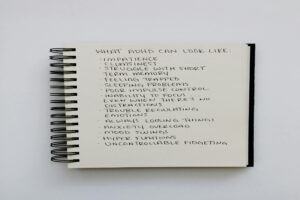
People sometimes ask me whether I see ADHD as a superpower or a burden. My honest answer is that it depends on the day. There

I have spent years encouraging men to speak more openly about their mental health, particularly those working in construction. We tell men that asking for
In our fast-paced, constantly connected world, it’s easy to overlook one of the most crucial aspects of our well-being: mental health. Often overshadowed by physical health, mental health is just as important, if not more so, in ensuring a balanced and fulfilling life.

In the construction industry, where the focus traditionally lies on physical safety, productivity and project delivery, mental health has often been a neglected topic. However,
If you’re feeling overwhelmed or need someone to talk to, there are organisations that offer free, confidential support for mental health challenges, especially for professionals in high stress industries like construction and engineering. Here are some options available:
Provides a 24/7 confidential listening service for anyone struggling with their mental health or in distress.
A free and confidential text-based crisis support service available 24/7.
The Lighthouse Construction Industry Charity provides vital support to construction workers and their families, offering financial assistance, mental health support, and occupational health advice.
Mates in Mind works to improve mental health awareness within the construction sector. They provide training and resources to help businesses and workers address mental health challenges.
B&CE’s Construction Worker Helpline offers free support and guidance for industry workers facing financial difficulties, stress, or personal challenges. Available from 8am-8pm, 7 days a week.
Provides confidential advice and financial assistance for people working in the electrical industry.
The Rainy Day Trust provides financial assistance and support to those working in the home improvement, construction, and allied trades industries.
CRASH helps homelessness charities and hospices by providing construction-related assistance, offering expertise and materials for vital building projects.
This organisation helps young people discover career opportunities in the construction industry, breaking down stereotypes and offering pathways into the trade.
Offers emotional support and guidance for anyone affected by bereavement.
Provides 24/7 support for individuals struggling with gambling-related issues.
At AA, alcoholics help each other. We will support you. You are not alone. Together, we find strength and hope. You are one step away.
A free listening service for individuals experiencing suicidal thoughts, open from 6pm to midnight daily.
A helpline offering support and information to LGBTQIA+ individuals on topics like mental health, relationships, and identity.
Provides young people with advice and support on topics such as mental health, finances, relationships, and homelessness.
The construction industry can be both rewarding and challenging but no one should have to face difficulties alone. Whether you need financial help, mental health support or career guidance, these organisations are here to assist you. If you or someone you know is struggling, don’t hesitate to reach out. If you found this list helpful, consider sharing it with colleagues or on social media to spread awareness. Let’s build a stronger, healthier construction industry together!
Helping construction, one conversation at a time.
Helping construction, one conversation at a time.
We use cookies to make our website work properly, improve performance and personalise your experience. You can accept all cookies or manage your preferences.