

Construction Industry Challenges: Shining a Light on the Unseen Heroes
Construction Workers Deserve Dignity, Not Judgement There is something we need to talk about in construction, and it has nothing to do with productivity targets,
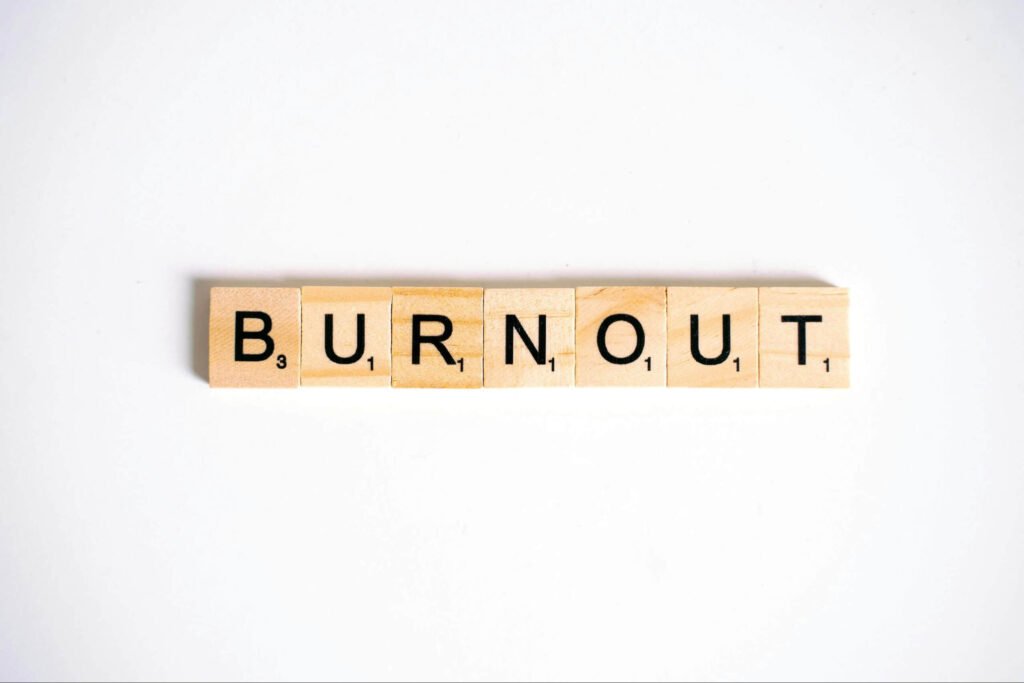
There is a line I have seen repeated many times online: “You will not burn out doing something you love.”
It sounds encouraging. It suggests that once we find our purpose, the work will somehow stop feeling heavy. If we are passionate enough, every long day will be worth it and our energy will keep renewing itself.
I wish that were true.
The reality is that we can love the work, believe in the mission and still become exhausted by the way we are carrying it. In fact, passion can sometimes make the warning signs easier to ignore. When something matters deeply, stopping can feel like letting people down. Rest can feel selfish. A boundary can feel like a lack of commitment.
I know that feeling through my work with Onward Shift. I created it because I care about people in construction and because I want mental health support in this industry to feel human, relevant and accessible. The blogs, podcasts, talks and conversations are not just tasks on a list. They are connected to my own life and to people who have trusted me with difficult experiences.
That meaning gives me energy, but it does not give me unlimited energy.
This is the part of burnout we need to speak about more honestly. Passion is valuable, but it is not protection. Purpose can guide us, but it cannot replace sleep, recovery, support or sensible limits.
Burnout is sometimes treated as a sign that somebody is in the wrong career. The answer offered is usually simple: leave the job, find your passion or do something that makes you happy.
Sometimes a role, workplace or career really is wrong for us. However, that is not the only explanation. A person can be doing work they value in conditions that are no longer sustainable.
The World Health Organization describes burnout as an occupational phenomenon arising from chronic workplace stress that has not been successfully managed. It is associated with exhaustion, greater mental distance or cynicism towards work and a reduced sense of professional effectiveness. It is not classified as a medical condition, and it is more than a bad day or a tiring week.
Notice what that definition does not say. It does not say burnout only happens when the work is boring, meaningless or disliked. It points to chronic stress and how that stress is managed.
This distinction matters in construction. A self-employed tradesperson may genuinely love the craft but accept every job because saying no feels financially risky. A site manager may care deeply about the project and their team, so they stay available from the first call in the morning until the final message at night. A business owner may be proud of what they are building but take every delay, complaint and setback personally.
The passion is real. So is the pressure.
Loving something can make it harder to recognise when our relationship with it has changed.
If we dislike a task, we usually notice the strain quickly. When we love it, we can explain the strain away. We tell ourselves the long hours are temporary, the lost weekend is necessary or the exhaustion proves how committed we are. We keep finding another reason why this is not the right moment to stop.
That can happen when the work becomes tied to identity. Instead of saying, “This is important to me,” we begin to feel, “This is who I am.” A setback no longer feels like a problem to solve; it feels like a judgement on our worth. Taking time away can create guilt because we are not only stepping back from a task. It feels as though we are stepping away from ourselves.
There is useful research behind this difference. Psychologists often distinguish between harmonious and obsessive passion. Harmonious passion allows an activity to matter without controlling the whole of a person’s life. Obsessive passion is driven more by internal pressure, self-worth or the feeling that we cannot disengage. Research on passion and wellbeing at work has linked harmonious passion with better wellbeing and a more protective response to workplace demands.
We do not need academic language to recognise the difference.
Harmonious passion sounds like: “I care about this work, and I can also stop.”
Obsessive passion sounds like: “If I stop, I am failing.”
Most of us will move between the two at different times. The aim is not to become less passionate. It is to notice when our passion is no longer a choice and has started to control our time, health and sense of self.
Building Onward Shift has taught me how easily meaningful work can expand into every available space.
When you believe the work may help somebody, there is always another thing you could do. Another article could be written. Another guest could be contacted. Another conversation could be answered. When the mission is personal, an unfinished task carries emotional weight.
For a long time, much of that work also had to fit around my life as an electrician. A day of physical work could be followed by writing, planning and thinking about the future of Onward Shift. The fact that I wanted to do it made the load easier to justify, but it did not make the load disappear.
My ADHD can add another layer. When I care about something, I can become deeply absorbed in it and lose track of time or of what my body needs. I have written more about that in my article on living with ADHD and the daily patterns people do not always see. That is my personal experience, not a claim that every neurodivergent person will experience work in the same way.
The wider lesson is relevant to anybody. Enjoyment can mask effort. Meaning can delay rest. Being good at carrying a heavy load does not mean the load is safe to carry indefinitely.
A while ago, I reached a point where my body and mind were both telling me to slow down.
My muscles ached. I felt unusually tired. My thinking became foggy and the creativity I normally relied on seemed to disappear. I could sit down ready to work and find that my mind was simply blank. The desire was still there, but the energy and clarity were not.
That experience was confusing because I still cared. I had not fallen out of love with the work, and I had not lost faith in what I was building. I was depleted.
The temptation was to treat the problem as a lack of discipline: try harder, find motivation or force something onto the page. What I needed was to step back.
Burnout signs will not look identical for everybody, and fatigue or poor concentration can have many physical and psychological causes. If tiredness persists, affects daily life or comes with other symptoms, it is sensible to seek medical advice rather than assuming it is simply work stress.
For me, the important change was recognising that a pause did not cancel the purpose. Resting did not mean I cared less about Onward Shift. It meant I wanted to continue in a way that did not destroy the person responsible for building it.
The internet loves a perfect morning routine.
Wake at five. Exercise. Read. Journal. Complete important work before everybody else has started. It can be useful for the right person, but it is not a moral test and it is not a universal route to success.
Construction workers already know what early mornings look like. Many leave home before sunrise, travel a long distance and begin demanding work while other people are still asleep. Telling somebody who is already exhausted that the answer is to wake even earlier is not helpful.
A routine should support your health, responsibilities and best work. For one person, an early start creates calm and focus. For another, later hours fit their natural rhythm, caring duties or shift pattern. The relevant question is not whether you can copy somebody else’s clock. It is whether your routine is sustainable for your life.
Success is built through consistent effort, learning, relationships and good decisions over time. None of those qualities belongs exclusively to people awake at 5 a.m.
There is also a risk in treating sleep as time stolen from ambition. When the working day is long, sleep is often the easiest thing to sacrifice because nobody else can see it. The result may look productive for a while, but the cost eventually appears in concentration, mood, physical health and relationships.
We should stop confusing exhaustion with commitment.
Knowing what you want can provide direction. It can reduce the frustration of working towards somebody else’s definition of success. It cannot make you invulnerable.
In some cases, alignment increases the risk because the goal matters so much. We tolerate more pressure, give away more time and dismiss more warning signs. A founder can tell themselves that every sacrifice is necessary because the mission is important. A project leader can believe the team will collapse if they switch off. A skilled tradesperson can keep accepting work because demand feels like proof they have finally succeeded.
The goal may be right while the pace is wrong.
This is why I no longer believe we should judge commitment by how much somebody is prepared to sacrifice. A meaningful ambition should have room for the rest of a meaningful life. Family, friendships, health, quiet, hobbies and sleep are not distractions from success. They are parts of the person pursuing it.
If reaching a goal requires us to become unrecognisable to ourselves, we need to examine the method rather than automatically abandoning the goal.
Conversations about burnout often place the full responsibility on the worker. Manage your time better. Meditate. Exercise. Learn to cope.
Those things may help, but they cannot solve an excessive workload, chronic understaffing, poor communication or a culture that rewards constant availability.
The latest HSE annual statistics reported that 964,000 workers in Great Britain experienced stress, depression or anxiety caused or made worse by work in 2024/25. HSE also estimated that stress, depression or anxiety accounted for 22.1 million working days lost during that period.
Those figures do not tell us who loves their job and who does not. They show that working conditions and mental wellbeing cannot be separated.
NICE guidance on mental wellbeing at work asks organisations to take a strategic approach, involve employees in decisions and enable managers to adjust workload or work intensity where needed. That is a far more useful response than telling an exhausted person to become more resilient while leaving the source of the pressure untouched.
In construction, leaders can make a real difference by planning realistic workloads, clarifying who is responsible for what and challenging the assumption that committed people must always be reachable. They can notice when the dependable person is carrying too much and ask a genuine question before performance begins to suffer.
Leaders also need boundaries. A director, contracts manager or supervisor who answers messages at every hour may believe they are being supportive, but they may unintentionally create the expectation that everybody should do the same. Modelling a stopping point gives other people permission to have one.
The answer is not to care less. It is to build a healthier relationship with the work we care about.
That begins with noticing identity. If a difficult day makes you question your entire value, the work may be carrying more of your self-worth than it should. Remind yourself that you are a person who does meaningful work; you are not only the work itself.
It also means creating stopping points before exhaustion creates them for you. A stopping point might be a final call time, an evening when the phone stays away or a decision that a non-urgent task moves to tomorrow. Boundaries will sometimes need to flex, especially in construction, but an emergency should not become the normal way of operating.
Check energy as well as output. We are used to asking what was completed, what remains and whether the deadline will be met. Ask what the work is costing too. Are you becoming more irritable? Is your concentration changing? Are you withdrawing from people? Are you losing interest in everything outside work? The answer may reveal a problem before productivity does.
Recovery should be part of the plan, not something left to chance after the work is finished. There will always be another task. A sustainable plan includes time when you are not useful, productive or available to the project.
Support matters as well. Speaking with somebody can help you separate a temporary difficult period from a pattern that needs to change. Depending on what you are experiencing, that may be a trusted person, your GP, a counsellor or a coach. Onward Shift’s support for people brings together counselling, coaching, events and honest conversations for people in and around construction. It is not about telling you to leave work you love. It is about helping you find a way forward that includes you.
For employers, Onward Shift supports construction companies through practical wellbeing support, lived-experience talks, toolbox talks and resources that can start better conversations. A talk should not be used to decorate an unhealthy culture. It should be part of a wider willingness to listen and change how work is planned and led.
I still love what I do. I still believe deeply in Onward Shift and in the difference honest conversations can make across construction.
What has changed is my understanding of what commitment should look like.
Commitment is not working until there is nothing left. It is caring enough about the mission to build it in a way that can last. It is recognising that a blank mind, aching body or short temper is information, not an inconvenience to ignore. It is accepting that rest does not need to be earned through collapse.
You can burn out doing work you love. You can be aligned with your goals and still need support. You can be ambitious without waking at 5 a.m., and you can step back without walking away.
Passion should add meaning to our lives, not consume every part of them.
Let’s change the narrative. Loving the work is not a reason to ignore our limits. It is a reason to protect them.

Construction Workers Deserve Dignity, Not Judgement There is something we need to talk about in construction, and it has nothing to do with productivity targets,

Construction has always valued resilience. We admire the people who turn up in every kind of weather, solve problems under pressure and keep projects moving

In the UK construction industry, safety discussions traditionally focus on physical hazards hard hats, harnesses, scaffolding and machinery safety but there’s an equally critical risk

Let’s be honest, the words construction and mental health haven’t always gone hand in hand. For decades, construction earned a reputation for being tough, demanding

Introduction: A Shift in the Right Direction The conversation around mental health in the construction industry has come a long way in recent years. Campaigns

“Work stays at work. Home stays at home.” We have all heard some version of that sentence. It sounds sensible. Keep things separate, stay professional
If you’re feeling overwhelmed or need someone to talk to, there are organisations that offer free, confidential support for mental health challenges, especially for professionals in high stress industries like construction and engineering. Here are some options available:
Provides a 24/7 confidential listening service for anyone struggling with their mental health or in distress.
A free and confidential text-based crisis support service available 24/7.
The Lighthouse Construction Industry Charity provides vital support to construction workers and their families, offering financial assistance, mental health support, and occupational health advice.
Mates in Mind works to improve mental health awareness within the construction sector. They provide training and resources to help businesses and workers address mental health challenges.
B&CE’s Construction Worker Helpline offers free support and guidance for industry workers facing financial difficulties, stress, or personal challenges. Available from 8am-8pm, 7 days a week.
Provides confidential advice and financial assistance for people working in the electrical industry.
The Rainy Day Trust provides financial assistance and support to those working in the home improvement, construction, and allied trades industries.
CRASH helps homelessness charities and hospices by providing construction-related assistance, offering expertise and materials for vital building projects.
This organisation helps young people discover career opportunities in the construction industry, breaking down stereotypes and offering pathways into the trade.
Offers emotional support and guidance for anyone affected by bereavement.
Provides 24/7 support for individuals struggling with gambling-related issues.
At AA, alcoholics help each other. We will support you. You are not alone. Together, we find strength and hope. You are one step away.
A free listening service for individuals experiencing suicidal thoughts, open from 6pm to midnight daily.
A helpline offering support and information to LGBTQIA+ individuals on topics like mental health, relationships, and identity.
Provides young people with advice and support on topics such as mental health, finances, relationships, and homelessness.
The construction industry can be both rewarding and challenging but no one should have to face difficulties alone. Whether you need financial help, mental health support or career guidance, these organisations are here to assist you. If you or someone you know is struggling, don’t hesitate to reach out. If you found this list helpful, consider sharing it with colleagues or on social media to spread awareness. Let’s build a stronger, healthier construction industry together!
Helping construction, one conversation at a time.
Helping construction, one conversation at a time.
We use cookies to make our website work properly, improve performance and personalise your experience. You can accept all cookies or manage your preferences.