

The Heart Attack That Changed Everything | Dave Harris
There is something frighteningly ordinary about the day Dave Harris experienced the heart incident that changed his life. He woke up early, travelled into London,
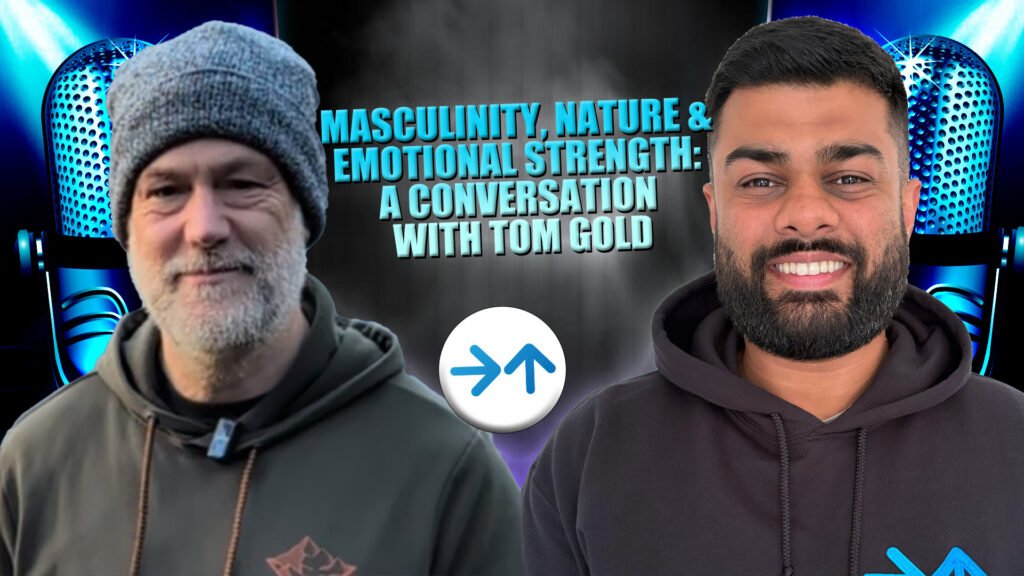
What does it actually mean to be a strong man today? It sounds like a simple question but the answer feels more complicated than ever for generations, many men were given a fairly clear blueprint. Work hard, provide, protect, keep your word, don’t complain and get on with it. In many ways, that mindset helped build families, communities and industries like construction. There is something deeply respectable about being reliable, disciplined and able to keep going when life gets difficult. The problem is that somewhere along the way, a lot of men were taught that strength meant silence. They were taught that carrying everything alone was normal, that asking for help was weakness and that being emotionally honest somehow made them less of a man.
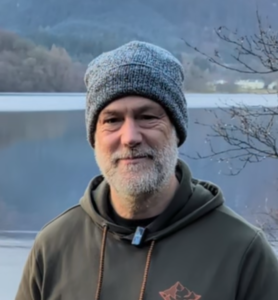
This conversation with Tom Gold on the Onward Shift Podcast really brought that into focus. Tom is a life coach, personal trainer and bushcraft instructor who works closely with men through outdoor experiences, bushcraft and community-led work. What started as a conversation about men’s mental health quickly became something much deeper. We spoke about masculinity, nature, emotional strength, role models, community, identity and the quiet pressure so many men carry behind closed doors. One of the strongest themes in the episode was what Tom called “The Man Code”, this unwritten rulebook that tells men to internalise their struggles, tell everyone they’re fine and wait for things to improve.
For anyone working in construction, that idea will probably feels familiar. Construction is an industry built on graft, grit, resilience and showing up. You learn quickly that people respect those who can crack on, solve problems and keep moving. That can be a strength but it can also become a trap because when “cracking on” becomes the only tool you have, it can stop you from admitting when things are getting heavy. This blog is not about attacking masculinity or telling men they need to become someone else. It is about asking whether there is a stronger, healthier version of masculinity available to us, one where men can still be dependable, practical and resilient but also honest enough to say when they are struggling.
Tom’s work is interesting because he does not approach men’s mental health in the way many people might expect. He is not trying to force men into awkward circles where everyone has to immediately share their deepest pain. In fact, he made it clear during the conversation that he rarely front-loads emotional discussions or puts people on the spot. Instead, he creates environments where conversation can happen naturally. That might be around a fire, while building shelter, walking through woodland or spending time outdoors with other men. The conversation itself becomes less pressured because the focus is not solely on “talking about feelings”. The focus is on doing something together, slowing down and creating the conditions where people feel safe enough to speak if they want to.
That matters because when people say “men need to talk more”, the intention is usually good but the reality is more complicated. A lot of men have never been given the language to explain what they feel. They may know they are angry, stressed, tired or fed up but they might not know how to describe what sits underneath that. Is it fear? Shame? Loneliness? Pressure? Grief? Disappointment? Without the vocabulary, opening up is not as simple as people make it sound. Tom described this really well when he spoke about the idea of emotional coherence, which is not about pouring your heart out every five minutes but being able to say clearly and honestly what is going on inside you.
That distinction is important, especially for construction. Many people in the industry are not looking for soft slogans or corporate wellbeing language. They want something real, grounded and useful. Emotional coherence gives us that. It says you do not have to perform vulnerability to prove you are emotionally aware. You do not have to break down in front of everyone. You can simply be honest in a practical way. You can say, “I’m struggling at the moment” or “I need a bit more time” or “I’m not in the best headspace today” That is not weakness. That is awareness and awareness is often the first step towards dealing with things before they become overwhelming.
One of the most powerful parts of the podcast was when Tom reflected on a difficult period in his own life. Following divorce and a sudden house move while having two young sons, his mental health took what he described as a nosedive but instead of talking about what was going on, he followed what he called The Man Code. He nailed the lid shut on his emotions, told everyone he was fine and waited for things to improve. That description is powerful because so many men will recognise it instantly. It is not dramatic. It is not unusual. It is exactly what countless men do every day.
The Man Code is not something most men consciously sign up to. It is learned quietly through family, culture, work, school, sport and the men we grow up around. Many boys learn early that certain emotions are acceptable and others are not. Anger might be tolerated but sadness is uncomfortable. Stress might be joked about but fear is hidden. Pressure is normalised but vulnerability is avoided. Over time, men can become very good at appearing okay, even when internally they are anything but okay. They still go to work, still make people laugh, still pay the bills, still show up for everyone else but the cost is that they become increasingly disconnected from themselves.
Tom made an important point during the conversation. The Man Code exists because, in some ways, it has worked. History is full of men who achieved incredible things while suppressing their emotions. They carried huge responsibility, endured hardship and built lives while saying very little about what they were feeling but Tom also asked a question that really stayed with me. What could those men have achieved if they had not been carrying all of that alone? That question changes the conversation. It stops us from simply saying the old way was wrong and instead asks whether there is a better way available now.
That is where emotional strength needs to be redefined. Strength is not pretending everything is fine until you break. Strength is not carrying pressure silently until it turns into anger, addiction, burnout or isolation. Real strength might actually be the ability to understand what is happening inside you before it takes control. It might be the ability to communicate honestly with the people around you. It might be knowing when to ask for support, not because you are weak but because you are human.
I really liked Tom’s use of the phrase emotional coherence because it feels less intimidating than vulnerability. A lot of men hear the word vulnerable and immediately shut down because it sounds like something they do not want to be. It can feel exposed, unsafe or too far away from how they see themselves. Emotional coherence feels different. It sounds practical. It sounds like something you can work on. It sounds like something that belongs in real life, not just in therapy rooms or wellbeing seminars.
Emotional coherence is the ability to understand and express what is happening internally in a way that is clear and honest. That does not mean you have to tell everyone everything. It does not mean you need to constantly talk about your emotions. It simply means you are not completely disconnected from yourself. You can recognise when you are overloaded. You can name when you are struggling. You can communicate what you need without waiting until everything explodes. In construction, that kind of skill is hugely valuable because the industry is already full of pressure, deadlines and responsibility. If someone has no way of expressing what is going on internally, the pressure does not disappear. It usually leaks out somewhere else.
This is something I relate to deeply. Even though I speak about mental health, run Onward Shift and have done a lot of work on myself, I still hold things in. I still have moments where stress, anxiety or emotion sits inside me longer than it should. Like I said during the podcast, being vulnerable was never something I was taught. It can feel like I am trying to unlearn 30 years of conditioning and then relearn something completely new. That is not easy. It is scary but it is also necessary because if we never learn how to understand ourselves, we end up being controlled by things we cannot even name.
This is where conversations around mental health in construction need to mature. It is not enough to tell men to talk. We need to help them build the language, confidence and trust to talk properly. We need to create environments where honesty does not feel like a risk. We need to stop treating emotional expression as something strange and start treating it as another part of being human. A man who can say, “I am not coping well today,” is not less capable. He is more aware and awareness can prevent things from getting worse.
One of the things I shared with Tom during the conversation is something I have seen again and again through Onward Shift. Vulnerability breeds vulnerability. When one person speaks honestly, it gives permission for someone else to do the same. I have experienced this personally when talking about my own suicidal thoughts, ADHD, OCD and therapy. The moment I share something real, someone else often says, “Mate, I get it,” and then they begin to share something they have been carrying quietly. That is not because my story creates their struggle. Their struggle was already there. My honesty simply opens a door.
This matters because many men are waiting for someone else to go first. They are not necessarily unwilling to talk but they are unsure how it will be received. They do not want to be judged, mocked, dismissed or seen differently. So they wait. They test the environment. They look for signs that it is safe. When someone else speaks honestly and is met with respect rather than ridicule, the whole dynamic changes. That is how trust is built. Not through posters or slogans but through lived examples.
Tom sees this in the work he does outdoors. He spoke about men gathering around a fire and how conversations naturally begin to open up when the right environment is created. Not everyone speaks. Some men might attend and say very little but they still feel part of something. That is important too. Support does not always mean speaking. Sometimes support is simply being in a space where you know you would be listened to if you chose to talk. That sense of belonging can be powerful in itself.
Construction has always had camaraderie but camaraderie alone is not always the same as emotional safety. You can have banter, teamwork and shared graft without people feeling able to say what is really going on. The next step for the industry is not to remove humour or toughness but to deepen the trust underneath it. Imagine a construction culture where people can still have a laugh, work hard and take pride in what they do but also feel able to say, “I’m not alright today,” without fearing what comes next. That is the kind of culture shift that could genuinely change lives.
One of the most fascinating sections of the podcast was Tom’s story about working with young gang members in Arizona. These were young men who had often grown up around violence, street gangs and environments where toughness was not optional. Many of them had been let down by adult men and had learned to survive by becoming hard, guarded and emotionally protected. On paper, they might not sound like the kind of people who would sit around a fire and talk about their fears, regrets and hopes but that is exactly what happened when they were taken into the wilderness.
Tom explained that during the expeditions, these young men were different. Rival gang members who would have been enemies elsewhere began looking out for one another. They trusted each other while climbing, helped one another and became more peaceful in the outdoor environment. Each expedition ended with a three-day solo experience where they were given basic supplies, a tarpaulin and a diary. With no distractions and nowhere else to look, they had to look inward. Their journals filled with regret, fear, hope and reflection. When they came back together around the fire, many wanted to stay up all night talking.
What stood out to me is that Tom did not claim he changed them through one deep conversation. In fact, he said it was the place that seemed to do the work. Nature had a calming and levelling effect. These young men, some of whom had been involved in extreme situations, would stop to watch a sunset because it was so beautiful. That is powerful. It shows that even the hardest exterior can soften when the right conditions are present. It also reminds us that underneath all the roles, labels and identities, people are still people. They still respond to beauty, still need connection and still carry things they may never have had space to express.
That story matters beyond Arizona. It tells us something about men more generally. Whether someone is a gang member, a construction worker, a manager, a father or a young apprentice, human beings need environments where they can let their guard down. Nature seems to offer that in a way modern life often does not. It removes some of the noise, status and performance. It reminds people that they are part of something bigger and sometimes that is exactly what is needed to create space for reflection.
During the podcast, Tom explained the difference between hard attention and soft attention. Hard attention is the kind of focus demanded by things like video games, traffic, emails, social media, deadlines and constant notifications. It grabs your attention and keeps your brain switched on but it does not necessarily soothe you. Soft attention is different. Nature holds your attention gently. A moving stream, birdsong, clouds shifting over hills, rain hitting a shelter or flames moving in a fire all give your mind somewhere to rest without overwhelming it.
That idea really connected with me because I have felt it myself. When I take my dog for a walk, there is a point where everything starts to slow down. I can hear the water moving, birds in the trees and my dog stepping through the stream. If I put my phone away and actually stop, something shifts. I cannot always explain it logically but it feels like being pulled back into the present. It is almost instant. The noise in my head quietens. The pressure softens for a moment, I am not trying to achieve anything, respond to anything or prove anything. I am just there.
The challenge is that we now carry a device in our pocket that can remove us from that experience in seconds. Tom made a great point when he said that the minute you go back online, you are not really there in the same way. That is so true. You can be physically standing in a beautiful place while mentally being dragged back into emails, messages, work stress or social media. Being outdoors helps but only if you actually allow yourself to be there. That does not mean you need to disappear into the wilderness for a week. Sometimes it might simply mean taking a walk without headphones, sitting outside for ten minutes without scrolling or noticing the sky instead of rushing past it.
For construction workers, this matters because the industry can be overstimulating in a different way. Noise, movement, deadlines, machines, traffic, customers, managers and pressure can keep the nervous system switched on all day. Getting outside in a calmer way, away from work demands, can become a reset. It does not solve everything but it creates a pause and sometimes a pause is enough to stop things building further.
One of the most personal parts of the conversation for me was when I spoke about feeling insignificant. That might sound negative at first but it was actually one of the most uplifting realisations I have had. I was in Cornwall, standing high above the ocean, watching the waves crash against the rocks below. The sea looked huge, powerful and full of energy. In that moment I realised how small I was compared with everything around me.
I was just one person standing there, trying to survive and make sense of life like everyone else but instead of feeling frightening, it felt freeing.
We live in a world obsessed with significance. People are chasing bigger houses, better cars, more followers, more status, more money and more recognition. We are constantly being told to become more, achieve more and prove more. That pressure can be exhausting. Nature challenges it without saying a word. Stand in front of the ocean, a mountain, a forest or a night sky and suddenly the world feels too big for your ego to dominate. You remember that life is not only about achievement. It is also about presence, appreciation and perspective.
Tom understood that immediately. He spoke about the sense of wonder that comes when people lift their eyes in a spectacular place. He also shared a story about a man on one of his wilderness resets who noticed dark patches moving across the hills and asked what they were. Tom realised the man was seeing cloud shadows moving across the landscape, something Tom had seen countless times but this man, who worked long hours in a city, had not noticed before. That says a lot. Many people have not lost the ability to connect with nature. They simply have not had the space to experience it properly.
There is something beautifully equalising about nature too. As Tom said, when it rains, it does not matter what you earn, you still get wet. When it is cold, you shiver like everyone else. When the sun comes out, you feel relief like everyone else. Nature strips away some of the artificial layers we place between ourselves and others. CEO or labourer, wealthy or struggling, confident or lost, everyone is still human out there. That is a powerful reminder.
Another important part of the podcast was the discussion around modern masculinity and identity. Tom spoke about how previous generations of men often had a shorter list of expectations. Provide for the family, work hard, set an example and, in the extreme, be ready to protect your country. Today, the list feels much longer and much more confusing. Men are expected to be emotionally aware, professionally successful, physically strong, socially sensitive, supportive partners, involved fathers and still somehow resilient enough to manage everything without complaint.
That does not mean progress is bad. In fact, some of these changes are positive. I said during the podcast that I do not think men should have to be the only breadwinners anymore. I know men in their fifties and sixties who hate their jobs, feel disconnected from their children, have very few friends and have built their entire identity around work. That is not freedom. That is a different kind of pressure. If society is shifting in a way that allows men and women to share responsibility more equally, that could actually free men from carrying roles they never fully chose.
The challenge is finding balance. Men should not have to abandon who they are to fit every new expectation placed upon them. I spoke about something as simple as opening a door for someone. I do it because it feels good to me, not because I think anyone is incapable. If someone is offended, I can explain that I meant no harm but I do not want to completely change who I am at my core to please an unknown number of people. That is where modern masculinity becomes tricky. Men are trying to work out which parts of themselves are healthy, which parts need changing and which parts they are allowed to keep.
This is where emotional coherence becomes useful again. It allows men to think honestly about who they are rather than simply reacting defensively to change. Masculinity does not need to be destroyed. It needs to be understood, refined and expanded. Men can still be protectors and providers if they choose but they can also be community builders, listeners, mentors, friends, fathers, neighbours and role models. The values of men do not need to be limited to two narrow roles. There is so much more men can offer.
Tom made a brilliant point when he said that one role many men can fulfil but often avoid is being a role model. The phrase role model can sound intimidating because people think it means being perfect, wise or hugely successful but Tom’s experience working with young men showed something much simpler. Many young men did not need someone flashy or impressive. They needed someone consistent. Someone who turned up on time, stayed sober, kept their word and listened without judgement.
That really hit me because I have often felt scared of being a role model. I did not grow up with a strong male role model in the way many people imagine, so the idea of becoming one can feel overwhelming. What if I get it wrong? What if I say the wrong thing? What if I let someone down? But the older I get, the more I realise that not showing up because you are scared of failing can sometimes cause more harm than showing up imperfectly. If you make a mistake, you can apologise and take ownership but if you do not show up at all, the person who needed you still goes without.
Tom simplified it beautifully. Be respectful, turn up, do what you say you are going to do and listen. That is it. You do not need to understand every detail of someone’s world to be useful to them. You can say, “I don’t fully get it but help me understand.” That alone can mean a lot. In a world full of noise, being genuinely present is becoming rare and because it is rare, it is powerful.
For construction, this matters massively. Apprentices, younger workers and students entering the industry are not just learning technical skills. They are watching behaviours. They are watching how older workers communicate, handle stress, treat others, manage pressure and respond to mistakes. The culture they inherit will become the culture they repeat. That means every person in the industry has an opportunity to model something better. Not perfectly but honestly.
The biggest lesson from this conversation is that emotional strength is not built through one dramatic change. It is built through small repeated choices. Getting outside more often is one of the simplest starting points. You do not need to book a wilderness retreat or disappear into the mountains. Take a walk without your phone in your hand. Notice the weather. Listen to the birds. Watch the clouds. Sit near water if you can. Give your mind something natural to rest on instead of constantly feeding it more noise.
Another practical step is to create spaces where honest conversations can happen naturally. That might be a walk with a mate, a coffee after work, a fire pit in the garden, a gym session, a fishing trip or simply checking in properly with someone instead of accepting the automatic “yeah, I’m fine.” Men do not always open up face to face under pressure. Sometimes they open up shoulder to shoulder while doing something else. That is not avoidance. That is often how trust is built.
A third step is learning to speak with emotional coherence. Instead of waiting until everything becomes too much, practise naming what is happening earlier. You might say, “I’m overwhelmed” “I’m under pressure” “I need a bit of time” or “I’m not in a great place today” That kind of language can feel awkward at first, but it gets easier with use. Like any skill, it improves through repetition. The aim is not to become emotionally perfect. The aim is to become honest enough that you do not have to carry everything alone.
Finally, consider where you can show up for someone else. You do not need to fix their life. You do not need all the answers. You might simply need to listen, keep your word and be consistent. Sometimes that is enough to make someone feel less alone and when enough people start doing that, culture changes.
Towards the end of the podcast, Tom asked how I was. My answer was honest. I said I was surviving, keeping my head above water, overworked and tired but I also said that conversations like this ignite the fire in me. That is the truth. I have hope because I believe improving men’s mental health does not just improve one man’s life. It improves his relationships, his family, his work, his friendships and his community. When one person learns to manage their mental health better, the impact spreads further than we realise.
This is why Onward Shift exists. Not to lecture people, not to shame men and not to tell construction workers they are broken. It exists because too many people are still struggling quietly and support needs to feel easier to find. Blogs, podcasts, toolbox talks, coaching, counselling and community conversations all play a part. None of them are the whole solution on their own but together they create more opportunities for someone to find the right support at the right time.
The conversation with Tom reminded me that sometimes the answers are not as complicated as we make them. Men need connection. Men need purpose. Men need space. Men need language. Men need places where they can stop performing and start being honest. Nature offers one version of that. Community offers another. And maybe the future of men’s mental health depends on creating more spaces where both can exist together.
Beyond the Man Code is not about rejecting masculinity. It is about expanding it. It is about recognising that the old model of silence, suppression and carrying everything alone is not the only option. Men can still be strong, dependable, capable and resilient while also being honest, connected and emotionally aware. In fact, that might be the strongest version of masculinity available to us.
Tom’s work shows that when men are placed in the right environment, they often do talk. They reflect. They support each other. They laugh. They listen. They become part of something. Whether that happens around a fire, on a mountain, beside the ocean, on a dog walk or in a conversation after work, the principle is the same. Men do not always need to be forced open. Sometimes they just need the right conditions to feel safe enough to unlock what has been sitting inside them for years.
If there is one thing to take from this conversation, it is that emotional strength is not the absence of emotion. It is the ability to understand what you feel, communicate it honestly and stay connected to the people around you. Nature reminds us to slow down. Community reminds us we are not alone. And honest conversation reminds us that strength and vulnerability were never enemies. They were always meant to work together.
So maybe the future of men’s mental health, especially in construction, is not about asking men to become someone completely different. Maybe it is about helping men come back to themselves. Back to nature. Back to community. Back to honesty. Back to the understanding that they do not have to carry everything alone. That is where real emotional strength begins.
If you prefer listening over reading, you can hear the full conversation on the Onward Shift Podcast.
 Listen to the episode here:
Listening in your van, on-site or on a walk can sometimes land harder than words on a screen.
Linkedin – https://www.linkedin.com/in/tom-gold-42a288254/
Website – https://www.mensoutdoorgroup.co.uk

There is something frighteningly ordinary about the day Dave Harris experienced the heart incident that changed his life. He woke up early, travelled into London,

What Mental Health Really Looks Like in Construction Two years ago, back in 2024, I was an electrician woking on the tools while managing my

From Apprentices to CEOs When you picture the construction industry, what comes to mind? For many, it is still rows of men in hi-vis jackets

There is a construction company somewhere with a mental health policy on its shared drive, a poster in the canteen, an employee assistance programme mentioned

Construction asks people to adapt every day. Programmes change, materials arrive late, jobs overrun and workers are expected to solve problems while keeping one eye

The first time I told my mum that I needed help with my mental health, I was 24. I had spent a long time trying
If you’re feeling overwhelmed or need someone to talk to, there are organisations that offer free, confidential support for mental health challenges, especially for professionals in high stress industries like construction and engineering. Here are some options available:
Provides a 24/7 confidential listening service for anyone struggling with their mental health or in distress.
A free and confidential text-based crisis support service available 24/7.
The Lighthouse Construction Industry Charity provides vital support to construction workers and their families, offering financial assistance, mental health support, and occupational health advice.
Mates in Mind works to improve mental health awareness within the construction sector. They provide training and resources to help businesses and workers address mental health challenges.
B&CE’s Construction Worker Helpline offers free support and guidance for industry workers facing financial difficulties, stress, or personal challenges. Available from 8am-8pm, 7 days a week.
Provides confidential advice and financial assistance for people working in the electrical industry.
The Rainy Day Trust provides financial assistance and support to those working in the home improvement, construction, and allied trades industries.
CRASH helps homelessness charities and hospices by providing construction-related assistance, offering expertise and materials for vital building projects.
This organisation helps young people discover career opportunities in the construction industry, breaking down stereotypes and offering pathways into the trade.
Offers emotional support and guidance for anyone affected by bereavement.
Provides 24/7 support for individuals struggling with gambling-related issues.
At AA, alcoholics help each other. We will support you. You are not alone. Together, we find strength and hope. You are one step away.
A free listening service for individuals experiencing suicidal thoughts, open from 6pm to midnight daily.
A helpline offering support and information to LGBTQIA+ individuals on topics like mental health, relationships, and identity.
Provides young people with advice and support on topics such as mental health, finances, relationships, and homelessness.
The construction industry can be both rewarding and challenging but no one should have to face difficulties alone. Whether you need financial help, mental health support or career guidance, these organisations are here to assist you. If you or someone you know is struggling, don’t hesitate to reach out. If you found this list helpful, consider sharing it with colleagues or on social media to spread awareness. Let’s build a stronger, healthier construction industry together!
Helping construction, one conversation at a time.
Helping construction, one conversation at a time.
We use cookies to make our website work properly, improve performance and personalise your experience. You can accept all cookies or manage your preferences.