
The Ripple Effect of Workplace Accidents
Workplace safety is often viewed in terms of compliance and statistics. However, behind every workplace accident is a human story often one of pain, perseverance
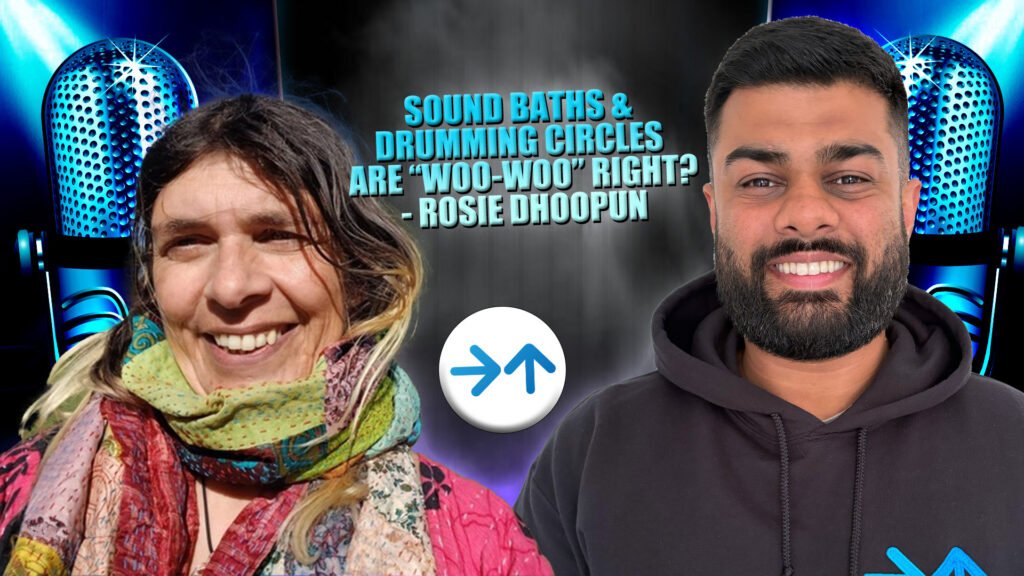
There are some conversations I go into knowing roughly where they will lead. This was not one of them. When Rosie Dhoopun joined me on the Onward Shift Podcast, I knew she ran drumming circles and sound baths, but I did not really understand either of them. I said openly that they sounded a bit “woo-woo” to me, not to be dismissive, but because that was honestly where my knowledge ended.
What followed was not a claim that one activity can fix everything, and that is not what this blog is either. It was a personal conversation about grief, expression, belonging and the different ways people may create enough space to notice what they are carrying. Rosie shared the story of her son Bryn, who was born with Trisomy 18 and lived for six months, and explained how drumming became part of her life after his passing. We also explored why an unfamiliar wellbeing activity can feel particularly daunting for men, what a drumming circle or sound bath may actually involve, and why there is value in male-only, female-only and mixed spaces rather than assuming that one setting will suit everybody.
Rosie’s experience does not prove that drumming or sound baths will work for every person, and neither practice should be presented as a replacement for medical care, counselling or another appropriate form of professional support. What her story does show is that support can take more than one shape, and sometimes the first step is simply being willing to experience something unfamiliar without deciding in advance what it must mean.
Content note: This article includes discussion of a medically complex pregnancy, the death of a baby, grief, depression and previous overdoses. Please take care while reading. If anything in Rosie’s story brings up something difficult for you, the NHS guidance on grief and bereavement explains where support is available. If you or somebody else is in immediate danger, call 999.
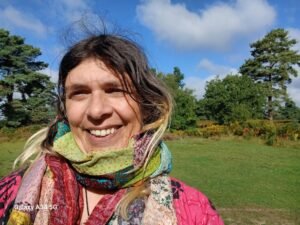
Rosie runs sound baths and drumming circles in Suffolk through Labyrinth of Nurture. In our conversation, she explains what happens in these sessions, why she started facilitating them and how her own experience of loss sits beneath the work she now does. The episode also captures my perspective as somebody approaching the subject with curiosity but very little prior understanding.
That scepticism matters because it will be familiar to plenty of people in construction. If you have spent years in an environment where support usually means a quick chat, a pint after work or being told to crack on, walking into a room with drums, gongs and singing bowls can feel a long way outside your comfort zone. The point of this episode is not to tell anybody what they should believe. It is to remove some of the mystery, ask honest questions and make it easier to decide for yourself whether an experience like this is worth exploring.
Around thirteen years ago, Rosie was going through a difficult pregnancy when she saw an advert for a drumming circle at a Mind Body Spirit fair. Something about it stayed with her, although the facilitator advised her to return after her baby had been born.
At the 20-week scan, Rosie learned that there were concerns about her baby’s development. Her pregnancy changed from something she had hoped would be calm and joyful into repeated appointments, uncertainty and fear. Her son Bryn was later born with Trisomy 18, also known as Edwards’ syndrome, a rare and often life-limiting chromosomal condition. For anyone wanting clear medical information, the Government’s guidance for parents about Edwards’ syndrome explains the condition and the care families may be offered.
Bryn came home and lived for six months. Rosie spoke about oxygen, seizures and expressing milk because he could not suckle, but she also made an important point: those six months were not only medical equipment and distress. There were funny moments and family memories too. A life can be short and still contain warmth, personality and love.
After Bryn passed, Rosie found that support for her own grief was not simply placed in front of her. She would have needed to go looking for it while continuing to care for her family and live through the loss itself. Her home-education community offered practical connection, and the drumming circle she had remembered became somewhere she could return to each month.
Rosie was particularly conscious of her mental health because she had experienced serious depression earlier in life and had taken overdoses in her twenties. She knew that she needed ways to remain connected rather than disappearing into herself. Drumming was one of those ways for her. It was not described as erasing Bryn’s passing or completing a neat recovery. Grief does not work like that. The NHS notes that grief affects people differently, that strong feelings can return unexpectedly and that there is no single correct sequence in which somebody must experience them.
Rosie still feels that truth years later. Near the end of our conversation, she explained that two friends were living through new, deep grief and that their experiences had brought thoughts of Bryn back to the surface. She had written about it, made room for a calmer day and planned to look after herself. Her relationship with grief is continuing, not because she has failed to move on, but because Bryn remains part of her life and story.
Soon after Bryn’s passing, Rosie had a clear feeling: she needed a drum. She went to a music shop, bought one and contacted the woman whose circle she had first seen advertised. She then sat in a bell tent in rural Suffolk with a group of people she did not know and began to play.
“I think the first time I hit the drum, I just felt like I’d come home to myself.”
That is Rosie’s description of her experience, not a promise about what somebody else will feel. What stands out is the combination of rhythm and belonging. She was not asked to find perfect words for something almost impossible to explain. She was doing something alongside other people, with enough structure to take part and enough freedom to respond in her own way.
Rosie continued attending the women’s circle each month for several years. When its facilitator moved to Scotland, three different friends, all called Sophie, encouraged Rosie to consider starting one herself. She did, initially holding circles in the woods before moving into an indoor space. Four years later, she continues to facilitate monthly sessions attended mainly by women and, at times, a small number of men.
This detail matters because the drum was not a sudden answer that appeared from nowhere. It became a repeated point of connection: a date in the diary, a familiar group, an activity and a place in which Rosie felt able to turn up as she was. People sometimes search for one grand intervention when a regular, supportive experience may be valuable precisely because it is ordinary enough to return to.
If the words “drumming circle” make you picture a performance in which everybody already knows what they are doing, Rosie’s description is much more accessible. In her sessions, people sit together and can borrow a drum if they do not own one. She introduces basic ways of playing by hand or with a beater, but the aim is not technical perfection. New people often worry about getting it wrong; Rosie’s response is that the circle is not built around passing a test.
The group may begin with a simple shared rhythm before each person finds a pace, volume or pattern that feels natural. The sound can build, change and eventually slow. Rosie described the silence after the final beat as an important part of the experience. There is also time to check in, although nobody has to disclose more than they want to.
The group agrees that personal things shared in the room are treated respectfully and not carried outside as gossip. Rosie also takes a “witness rather than fix” approach when emotion appears. If somebody cries, the automatic response is not to stop the tears, offer an instant solution or turn the moment into another person’s story. The group remains present. That is how Rosie chooses to facilitate her circles; it should not be assumed that every drum circle follows exactly the same format.
For people who find a face-to-face conversation intimidating, the activity itself may make attendance feel more manageable. You are not sitting opposite somebody with the expectation that you must immediately explain your entire life. Your hands have something to do. The group has a shared focus. Conversation can happen, but it is not the only route into the room.
There has been some research into group drumming and mental wellbeing, but the language around it needs care. One exploratory 2016 study of mental health service users reported improvements during a ten-week community drumming programme. That is interesting, but one study in a particular population cannot establish that every kind of drumming circle will improve a mental health condition. Rosie’s community sessions are also not the same thing as treatment delivered by a registered music therapist. It is reasonable to talk about enjoyment, expression, routine and connection; it is not reasonable to promise a clinical outcome.
Rosie’s sound-bath work began during lockdown, when she was working in pelvic-floor health and saw practitioner training advertised. She had previously attended a sound bath, wanted to understand the instruments and decided to train. Her first public session was fully booked, and she has continued running them since restrictions eased.
When I asked why I could not simply put on headphones and listen to R&B, Rosie explained that the in-person setting is part of what she offers. At her sessions, people arrive at a quiet village hall and settle on mats with their own blankets and cushions; chairs are available for those who cannot comfortably lie on the floor. Rosie explains what will happen, begins with a short guided meditation and then plays instruments that may include a frame drum, gong, metal or crystal singing bowls, bells, chimes and seed rattles. There can be pauses between sounds and a longer period of silence at the end.
Some people remain awake and notice thoughts coming and going. Others fall asleep. Rosie does not treat sleep as a failure, particularly for somebody who has struggled to find an undisturbed hour of rest. Afterwards, she does not immediately send everybody out of the door. Tea, homemade flapjack, quiet and optional conversation provide a gradual return to the rest of the day.
This description is useful because “sound bath” can sound mysterious when it is unfamiliar. At its most practical, the person attending is resting while a facilitator plays a sequence of live instruments in a prepared environment. Experiences vary, as do practitioners, instruments, room set-ups and styles of facilitation. If you are curious, it is sensible to ask beforehand about volume, accessibility, seating and what the session involves, particularly if you have a health condition or sensory need that may affect your comfort.
During the podcast, I realised that my concern about entering Rosie’s circle was not really about the drums. I expected the people there would be kind. What worried me was not knowing what might happen inside me. What if I became angry? What if frustration came out? What if I cried in front of a room of strangers? What if I could not control the reaction?
That fear will make sense to many men, especially those from industries where composure is closely connected with competence. On a construction site, you are expected to stay alert, solve problems and keep the job moving. Emotion is often allowed only in narrow forms: humour, annoyance, celebration or anger. Sadness, fear and grief are harder to name, particularly if you have spent years hearing that you should man up, calm down or get on with it.
Asking men to talk remains important, but we also have to be honest about the size of that request. A person who has never been shown how to describe what is happening internally may not be able to answer a direct “tell me how you feel” on demand. A walk, a practical task, a shared meal, a drum or another activity can reduce the intensity of that first encounter. It creates a point of connection that is not entirely dependent on eye contact and immediate disclosure.
This is one reason Onward Shift offers different ways to engage, from the stories on our mental health podcast to community and professional support for individuals and the outdoor connection available through our Men’s Outdoor Group. None is presented as the only correct door. What matters is that there is more than one door to try.
Rosie and I kept returning to the make-up of the room. Her groups are open, but most attendees are women. Some men have attended with partners and enjoyed the experience, yet a man arriving alone may still feel as though he is stepping into a space that was not designed with him in mind. Rosie wondered aloud whether a men-only session would make that first step easier.
I think there is a strong case for choice. A male-only space may reduce self-consciousness for a man who is testing something new or has never shown emotion around women. A female-only space can offer women room to speak and participate without the dynamics they may experience in a mixed group. Both can create a sense of shared understanding, but neither should be treated as proof that men and women all think, feel or communicate in one particular way.
Mixed spaces matter for a different reason. When people of different genders take part together, they have an opportunity to see one another beyond the labels that society attaches to certain activities. Drumming does not have to be a women’s wellbeing activity any more than fishing has to belong to men. A mixed group can make vulnerability less mysterious and help people realise that anger, grief, fear, joy and the need for rest are human experiences rather than gendered weaknesses.
The aim is not to declare one type of space better. It is to provide enough options for people to enter safely and, when they are ready, to meet each other with greater understanding. Separate spaces can be a starting point, a continuing source of community or both. Shared spaces can widen empathy. Good provision leaves room for all three: male, female and mixed.
One of the things I valued most about this conversation was noticing my own view change without pretending I had become an expert. I began by calling the subject “woo-woo”. By the end, I was interested enough to say I would try both experiences and talk honestly about how I found them.
Open-mindedness does not mean accepting every explanation attached to a practice. We can remain careful about scientific claims while still listening to what an experience means to the person describing it. We can say the research is early or limited and also recognise that regular rest, creative expression and time with other people may hold personal value. Those positions do not contradict each other.
It is equally important not to shame somebody if a session does nothing for them. Rosie made the point that facilitators bring different instruments, environments and approaches. You may dislike one session and prefer another, or decide the whole format is not for you. The same principle applies across mental health support: the first counsellor, group or activity you try may not be the right fit. That is information, not failure.
If grief, depression, anxiety or another mental health difficulty is affecting daily life, speak to a GP or an appropriately qualified professional.
Onward Shift’s counselling service provides a confidential space with BACP counsellors who understand high-pressure working lives, while our free mental health resources offer additional information and conversations. Drumming and sound baths can sit alongside suitable care if they are safe and helpful for the individual; they should not be used to replace it.
Rosie’s story is not powerful because it proves one method works. It is powerful because it shows how a person living through devastating loss found a recurring place where she could be with other people, use her body, make sound and feel a sense of belonging. The drum did not remove Bryn from her story. It gave Rosie one way to continue carrying that story while remaining connected to life around her.
It also challenged me to think more carefully about what we mean when we tell men to open up. If the only acceptable route is sitting down and speaking perfectly about feelings, we will keep losing people at the doorway. Some will begin while walking. Some while working with their hands. Some through counselling. Some in a room where the shared focus is rhythm, sound or silence. A different starting point does not make the emotion less real.
At Onward Shift, we will continue creating and sharing different spaces because no single approach will suit the whole construction community. The purpose is not to push people towards the latest idea. It is to make honest information available, challenge the assumption that unfamiliar means ridiculous and help each person find support that is appropriate for them.
Rosie’s invitation is simple: be curious enough to try, honest enough to notice your response and free enough to decide. You do not have to understand everything before you walk into a room. Sometimes it is enough to arrive, listen and see whether the experience gives you something you did not know you needed.
You can learn more about Rosie, her Suffolk drumming circles and sound baths through Labyrinth of Nurture, or listen to her own podcast, Whispers of the Labyrinth. To hear more conversations that make room for grief, men’s mental health and experiences that are often difficult to discuss, visit the Onward Shift Podcast.
If you prefer listening over reading, you can hear the full conversation on the Onward Shift Podcast.
 Listen to the episode here:
https://youtu.be/Qh5g_X6l0S8
Listening in your van, on-site or on a walk can sometimes land harder than words on a screen.
Website: www.labyrinthofnurture.co.uk
Substack: https://labyrinthofnurture.substack.com/

Workplace safety is often viewed in terms of compliance and statistics. However, behind every workplace accident is a human story often one of pain, perseverance

The Warning Signs We Would Never Ignore on Site If someone walked onto a construction site wearing damaged PPE, working near exposed live cables or

In our fast-paced, constantly connected world, it’s easy to overlook one of the most crucial aspects of our well-being: mental health. Often overshadowed by physical health, mental health is just as important, if not more so, in ensuring a balanced and fulfilling life.

You start a project expecting pressure. The programme is tight, several trades are working on top of one another and the client wants answers quickly.

I have spent years encouraging men to speak more openly about their mental health, particularly those working in construction. We tell men that asking for

Why Inclusion Is Non-Negotiable in Construction The UK construction sector is a powerhouse: over 2 million people employed and around 7% of national GDP generated.
If you’re feeling overwhelmed or need someone to talk to, there are organisations that offer free, confidential support for mental health challenges, especially for professionals in high stress industries like construction and engineering. Here are some options available:
Provides a 24/7 confidential listening service for anyone struggling with their mental health or in distress.
A free and confidential text-based crisis support service available 24/7.
The Lighthouse Construction Industry Charity provides vital support to construction workers and their families, offering financial assistance, mental health support, and occupational health advice.
Mates in Mind works to improve mental health awareness within the construction sector. They provide training and resources to help businesses and workers address mental health challenges.
B&CE’s Construction Worker Helpline offers free support and guidance for industry workers facing financial difficulties, stress, or personal challenges. Available from 8am-8pm, 7 days a week.
Provides confidential advice and financial assistance for people working in the electrical industry.
The Rainy Day Trust provides financial assistance and support to those working in the home improvement, construction, and allied trades industries.
CRASH helps homelessness charities and hospices by providing construction-related assistance, offering expertise and materials for vital building projects.
This organisation helps young people discover career opportunities in the construction industry, breaking down stereotypes and offering pathways into the trade.
Offers emotional support and guidance for anyone affected by bereavement.
Provides 24/7 support for individuals struggling with gambling-related issues.
At AA, alcoholics help each other. We will support you. You are not alone. Together, we find strength and hope. You are one step away.
A free listening service for individuals experiencing suicidal thoughts, open from 6pm to midnight daily.
A helpline offering support and information to LGBTQIA+ individuals on topics like mental health, relationships, and identity.
Provides young people with advice and support on topics such as mental health, finances, relationships, and homelessness.
The construction industry can be both rewarding and challenging but no one should have to face difficulties alone. Whether you need financial help, mental health support or career guidance, these organisations are here to assist you. If you or someone you know is struggling, don’t hesitate to reach out. If you found this list helpful, consider sharing it with colleagues or on social media to spread awareness. Let’s build a stronger, healthier construction industry together!

Helping construction, one conversation at a time.
Helping construction, one conversation at a time.
We use cookies to make our website work properly, improve performance and personalise your experience. You can accept all cookies or manage your preferences.