

Find Work in the Construction Industry in UK: A Practical Guide for 2026
If you’re thinking about getting into the construction industry in the UK, you’re probably standing at a crossroads. Maybe you’re 16 and you enjoy building
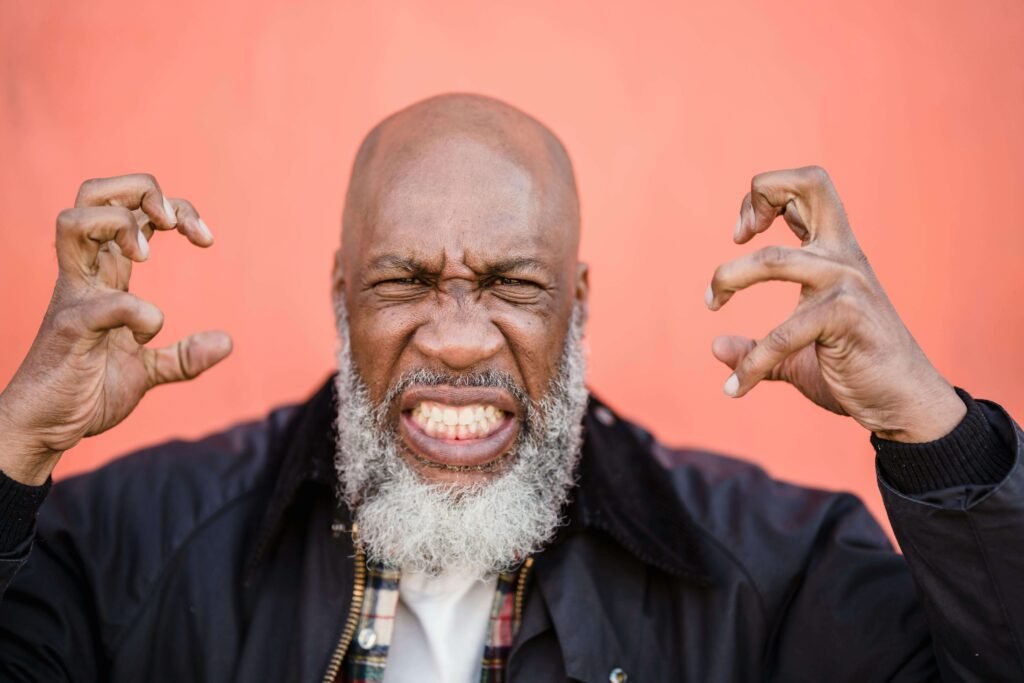
Anger gets spoken about in a strange way. People are quick to talk about what anger looks like when it comes out sideways, snapping at someone, punching a wall, slamming a door, swearing, driving aggressively, storming off site but hardly anyone teaches men what anger actually is, what sits underneath it or what to do with it before it explodes. That a huge part of the problem because anger itself is not the issue. Anger is a signal. It is often the body’s alarm bell telling you that something feels off, unfair, overwhelming, threatening, embarrassing, exhausting or loosing control. The problem is that many men, especially in environments like construction are taught how to suppress, mask or discharge anger but not how to understand it. So what happens? It comes out in the ways people can see. The sharp tone. The clenched jaw. The silence. The wall punch. The argument. The road rage then the regret afterwards.
This blog is not about shaming men for being angry. It is not a finger-pointing piece that says you’re aggressive, you’re toxic or you should know better. It is the opposite. It is about understanding anger properly, giving it language and finding real ways to manage it before it starts damaging your relationships, your work, your health and your peace of mind and if you work in construction, this matters because pressure builds quickly in this industry. Deadlines, clients, traffic, snagging lists, weather delays, money worries, fatigue, lack of sleep, problems at home all of that can pile up. Most men do not wake up and decide they want to lose their temper. More often, they are carrying too much for too long and have never been shown what to do with it.
One of the most important things to understand is that anger is rarely the first feeling. It is usually the second one.
Under anger there is often something softer, deeper or more uncomfortable. Stress. Embarrassment. Shame. Fear. Pressure. Hurt. Disrespect. Rejection. Exhaustion. Powerlessness but because anger feels stronger and more familiar, it rises to the surface first.
That is why so many men say, “I don’t know why I got angry,” when really the answer is there, just not in the words they currently have access to. Maybe they were not angry at all. Maybe they were overwhelmed. Maybe they felt trapped. Maybe they felt ignored. Maybe they felt like they were failing. Maybe they were absolutely shattered and one small thing tipped them over the edge. If you can start seeing anger as a messenger rather than proof that something is wrong with you, everything changes. You stop only focusing on the explosion and start looking at what actually lit that fuse.
When anger hits, it is physical before it is verbal. Your heart rate rises. Your jaw tightens. Your breathing shortens. Your muscles tense. Your body gets ready for action. That is because anger is closely tied to the nervous system. Your brain detects a threat and that threat does not have to be physical. It can be someone talking down to you, a feeling of being cornered, public embarrassment, stress that has built up all day or a situation that makes you feel out of control. Once the brain senses threat, the body starts preparing to fight, flee or defend. That is why anger can feel fast. It can feel like your body has decided before your brain has caught up.
This is also why saying “just calm down” to someone who is angry rarely ever works. Their body is already in a heightened state. They need regulation, not criticism. The good news is this because anger is physical, you can work with the body to bring it back down. That is where breathing, movement, stepping away and other practical tools come in but before we get to those, it helps to understand why so many men struggle with anger in the first place.
A lot of men were never given emotional vocabulary. They were given emotional rules. Don’t cry. Toughen up. Get on with it. Don’t be soft. Don’t make a scene. Stop feeling sorry for yourself. Those messages teach boys and men very quickly that certain emotions are unacceptable. Fear feels weak. Sadness feels embarrassing. Vulnerability feels risky but anger? Anger often gets a pass. Anger can look strong. Anger can feel active. Anger can create distance. Anger can stop people asking deeper questions.
So for many men, anger becomes the one acceptable emotion.
That does not make them bad people. It means they adapted to the environment they were shaped in. Construction can reinforce this without meaning to. It is an industry built on graft, pace, pressure and getting things done. There is a lot to admire about that but if a man is already carrying stress and emotional shutdown, that environment can harden the habit of expressing pain through irritation, sarcasm, snapping or aggression. If all you have ever learned is “keep going,” then stopping to ask, “What am I actually feeling?” can feel completely unnatural and extremely uncomfortable.
Construction is one of those industries where small frustrations can stack into big reactions before you’ve even realised what’s happening. You can start the day with a bad night’s sleep. Then the traffic’s fricking awful. Then someone’s late. Then the materials haven’t turned up. Then a client changes the plan. Then a site manager wants more done in less time. Then you get home and there’s pressure waiting there as well.
Individually, each thing might feel manageable. Together, they create a body and mind that is already overloaded. That is why sometimes the smallest thing can create the biggest reaction. It is not really about that one comment or one inconvenience. It is about everything else that came before it and this is where a lot of men feel shame. They think, “Why did I react like that? It was nothing.” but it was not nothing. It was the final straw. Understanding that does not excuse harmful behaviour but it does explain it and explanation matters because once you understand the pattern, you can interrupt it.
Imagine this. It is late afternoon. You have had a long day. You are tired, hungry and ready to get home. A manager walks over and says, “I need you to stay back and sort this now.”
In the first version, you are already running hot without realising it. You feel your chest tighten straight away. Your brain translates the moment as disrespect. You snap back, “You always leave this until the last minute. I’m not doing everything round here.” The tone rises. The manager gets defensive. The whole thing escalates. Now you are angry, embarrassed and even more worked up than you were before.
In the second version, you still feel the anger rise but instead you clock it quicker. You notice your body is hot, your jaw is tight and your thoughts are speeding up. Instead of answering instantly, you take a breath. You say, “I’m already at my limit today. I can talk this through but I’m not in a good place to respond properly right this second.” It is not perfect. It is not polished but it gives you space. It lowers the risk of saying something you regret.
That is what anger management really is. Not pretending you are not angry. Not becoming passive. It is noticing the anger early enough to choose what happens next.
This is where vocabulary matters. A lot of men do not need more advice first. They need better words. Because if everything gets labelled as anger then anger becomes the only tool available. Sometimes you are not angry. Sometimes you are frustrated because things keep changing. Sometimes you are overwhelmed because too much is happening at once. Sometimes you are embarrassed because you made a mistake in front of others. Sometimes you are anxious because you are under financial pressure. Sometimes you are hurt because someone’s words landed deeper than you expected. Sometimes you are exhausted and running on fumes.
The more specific you can get, the more power you get back.
Instead of saying, “I’m angry,” try asking yourself what sits underneath it. Am I feeling disrespected? Am I under pressure? Am I ashamed? Am I overstimulated? Am I tired? Am I hurt? Am I feeling out of control?
That shift sounds small but it is huge because once you can name the real feeling, you can respond to the real problem.
There are many words that can sit underneath anger and a lot of them are more accurate than angry ever was.
You might actually be feeling frustrated because something is not going to plan. You might be overwhelmed because too much has stacked up. You might be under pressure because expectations are unrealistic. You might feel disrespected because of how someone spoke to you. You might be embarrassed because you feel exposed. You might be disappointed, ignored, cornered, burnt out, anxious, hurt or completely drained.
Even saying, “I’m not angry, I’m overloaded,” can change a conversation. Saying, “I feel disrespected,” is much clearer than lashing out. Saying, “I’m actually exhausted and that’s why I’m short,” helps you understand yourself instead of just reacting.
This is where counselling can be incredibly useful. A lot of the work is not about being told how to behave. It is about being helped to understand what is really going on inside you, so that you can describe it properly and get the right kind of support.
Once anger is up, you need something practical. Not theory. Not a quote. Something real.
The first thing is to pause the reaction, even for ten seconds. You do not need to become a monk. You just need enough space to stop the anger choosing for you.
If possible, step away physically. Go outside. Go to the toilet. Walk to the van. Get a glass of water. Movement helps discharge some of that immediate physical activation.
Then slow your breathing down. This matters more than people think because anger speeds the whole body up. If you can slow the body, you can slow the reaction.
This is where the 4-7-8 breathing exercise can help. Breathe in through your nose for four seconds. Hold for seven. Exhale slowly for eight. Do that a few times. It is not magic and it does not solve the problem, but it does help bring your nervous system down enough to think more clearly.
If 4-7-8 feels too much in the moment, keep it simpler. In for four, out for six. The key thing is making the exhale longer than the inhale. That tells the body it is safe enough to come down a notch.
Another useful move is to delay the conversation. If you know you are too hot to respond well, say that. “I need five minutes.” “I’m too wound up to answer this properly right now.” “Let me come back to this.” That is not weakness. That is control.
Other Ways to Manage Anger Before It Manages You
Breathing is useful but it is not the only tool.
Walking is one of the best things you can do. A short walk changes your state, gives your body somewhere to put the adrenaline and gives your mind time to settle. It sounds basis but basic is often what works.
Cold water can help too. Splashing your face, holding a cold bottle of water or even stepping outside into colder air can interrupt that heated state.
Some people find it useful to write down what they want to say before they say it because anger can turn messy thoughts into messy words. Writing slows that down.
Others need to speak it out but not to the person they are angry with. A voice note to yourself. A trusted mate. A counsellor. Somewhere safe to unload the charge without causing damage.
And then there is prevention. Eating properly. Sleeping better. Reducing overload. Noticing patterns. A lot of anger management does not happen in the heated moment. It happens in the daily choices that lower the overall pressure in your system.
Sometimes you will still get it wrong, I know I do, we’re all human at the end of the day. There will be moments you will snap. You will say something badly. You will react in a way you are not proud of. That does not mean the work is pointless.
What matters then is what you do next.
First, own it. Not with self-hatred or excuses. Just honesty. “I handled that badly.” “I was out of line.” “I’m sorry.”
Second, get curious. What was actually underneath that reaction? What had built up? What signs did I miss before I went over?
Third, repair where possible. If you have hurt someone, come back to it properly. Do not just act like it did not happen. Repair builds trust. Avoidance breaks it.
Fourth, learn from it. Every angry moment leaves clues. The point is not to be perfect. The point is to become more aware.
A lot of people think counselling is only for when things are falling apart. In reality, one of the most useful things counselling can do is help you understand yourself before things get worse.
If anger has become your default response, counselling can help you work out why. It can help you trace the patterns, the triggers, the old messages you absorbed, the shame, the stress, the fear, the pressure and the parts of you that have never really had words before. It also gives you something many men have never had. A space where you do not need to perform. You do not need to be strong. You do not need to already know the answer. You can just bring the mess of what you are feeling and work through it. That matters because you cannot describe what you do not yet understand. And if you cannot describe it, you cannot get the right support for it. Counselling is not about making you less of a man. It is about giving you more control over the parts of your life that currently feel like they control you.
This needs saying clearly. You are not a disgrace for feeling angry. You are not broken. You are not automatically a dangerous person. You are not failing because you have a temper or because frustration builds inside you. Anger is human. It is often a sign that something matters, something hurts or something feels unfair. The goal is not to shame you out of it. The goal is to help you understand it, express it better and stop it costing you more than it already has.
A lot of men already carry enough shame. Shame about how they react. Shame about what they have said. Shame about what people must think of them. Piling more shame on top does not heal anything. It just drives the anger deeper underground until it comes out harder next time. What helps is honesty, support and practical tools.
If you want to know how to control anger, start by understanding it. Not judging it. Not hiding it. Understanding it. Most anger is not random. It is built. It has roots. It has warning signs. And once you start learning those signs, you begin getting your power back. Next time you feel it rising, do not just ask, “How do I stop being angry?” Ask, “What is this really about?” Ask what sits underneath it. Ask what your body is doing. Ask what you need in that moment to stop the reaction getting hold of the steering wheel.
Take the walk. Use the breathing exercise. Step away. Slow down. Speak more honestly. Get support if you need it and if anger is becoming something that is affecting your relationships, your work or your peace, consider talking to someone. There is no shame in needing help understanding what you feel. In fact, that is one of the strongest things you can do.
At Onward Shift, conversations like this matter because too many men are still carrying too much in silence. You do not have to wait until you have punched a wall, ruined a relationship or scared yourself with your own reaction before you decide to understand what is going on underneath it.
Start earlier. Start now and next time anger shows up, treat it like information, not identity.

If you’re thinking about getting into the construction industry in the UK, you’re probably standing at a crossroads. Maybe you’re 16 and you enjoy building

Construction Workers Deserve Dignity, Not Judgement There is something we need to talk about in construction, and it has nothing to do with productivity targets,

Life is unpredictable, with challenges, opportunities, and countless decisions. Navigating this complex path can often feel overwhelming, leaving many seeking guidance and clarity.

Conversations around mental health are slowly becoming more common in industries like construction but addiction is still one of the topics that often remains hidden

Two Conversations I Cannot Ignore It was worse than I thought. Much worse. I had spent years working in construction. I knew about the long

Ask most men who they are and they will usually tell you what they do. They will talk about their job, their responsibilities, their relationship,
If you’re feeling overwhelmed or need someone to talk to, there are organisations that offer free, confidential support for mental health challenges, especially for professionals in high stress industries like construction and engineering. Here are some options available:
Provides a 24/7 confidential listening service for anyone struggling with their mental health or in distress.
A free and confidential text-based crisis support service available 24/7.
The Lighthouse Construction Industry Charity provides vital support to construction workers and their families, offering financial assistance, mental health support, and occupational health advice.
Mates in Mind works to improve mental health awareness within the construction sector. They provide training and resources to help businesses and workers address mental health challenges.
B&CE’s Construction Worker Helpline offers free support and guidance for industry workers facing financial difficulties, stress, or personal challenges. Available from 8am-8pm, 7 days a week.
Provides confidential advice and financial assistance for people working in the electrical industry.
The Rainy Day Trust provides financial assistance and support to those working in the home improvement, construction, and allied trades industries.
CRASH helps homelessness charities and hospices by providing construction-related assistance, offering expertise and materials for vital building projects.
This organisation helps young people discover career opportunities in the construction industry, breaking down stereotypes and offering pathways into the trade.
Offers emotional support and guidance for anyone affected by bereavement.
Provides 24/7 support for individuals struggling with gambling-related issues.
At AA, alcoholics help each other. We will support you. You are not alone. Together, we find strength and hope. You are one step away.
A free listening service for individuals experiencing suicidal thoughts, open from 6pm to midnight daily.
A helpline offering support and information to LGBTQIA+ individuals on topics like mental health, relationships, and identity.
Provides young people with advice and support on topics such as mental health, finances, relationships, and homelessness.
The construction industry can be both rewarding and challenging but no one should have to face difficulties alone. Whether you need financial help, mental health support or career guidance, these organisations are here to assist you. If you or someone you know is struggling, don’t hesitate to reach out. If you found this list helpful, consider sharing it with colleagues or on social media to spread awareness. Let’s build a stronger, healthier construction industry together!

Helping construction, one conversation at a time.
Helping construction, one conversation at a time.
We use cookies to make our website work properly, improve performance and personalise your experience. You can accept all cookies or manage your preferences.