

Bridging the Generational Gap in Construction
The Industry Cannot Afford to Lose What Its People Know After more than 15 years working as an electrician, I can still remember lessons that
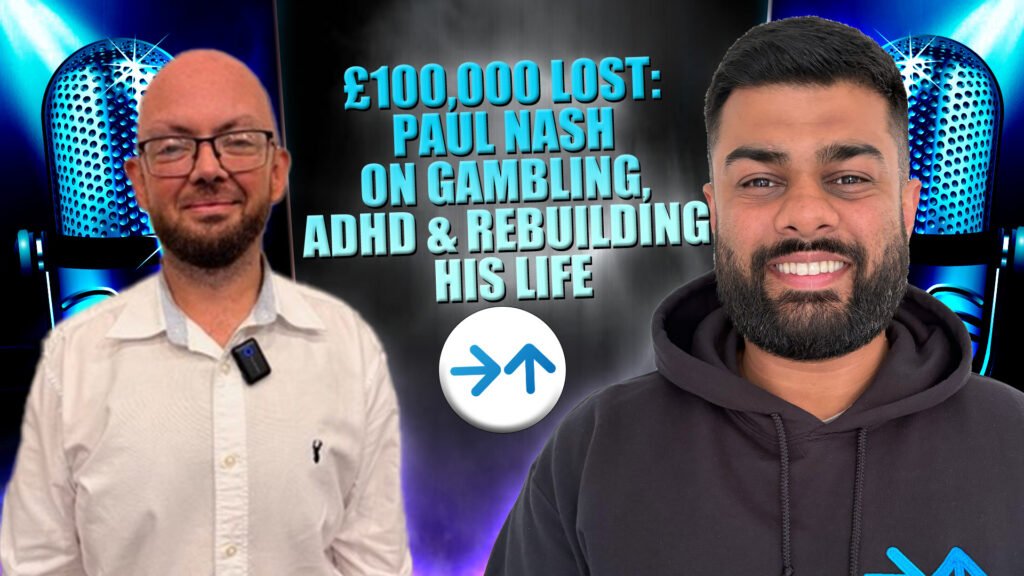
Conversations around mental health are slowly becoming more common in industries like construction but addiction is still one of the topics that often remains hidden in the shadows. People will openly talk about stress, long hours or burnout, yet addictions such as gambling frequently go unnoticed because they rarely leave visible signs. Unlike alcohol or substance misuse, gambling is often described as a hidden addiction. It can take place privately on a phone, late at night or quietly during spare moments. On the surface, everything may appear normal while underneath someone’s life is slowly being consumed by it.
During a recent episode of the Onward Shift Podcast, I sat down with Paul Nash to talk about exactly that. His story is one of resilience, determination and transformation. It is also a story that highlights how easily addiction can take hold, especially when combined with factors such as neurodiversity, pressure and isolation. Listening to Paul share his journey reminded me how important it is that we continue to open up conversations around mental health in construction and beyond. When people speak honestly about their experiences, it creates space for others to recognise their own struggles and realise that they are not alone.
Paul’s early life was not necessarily defined by hardship. In many ways he describes it as a good upbringing, although like many families it came with its own challenges. His childhood began in England, living with his parents and brother, surrounded by pets and a fairly ordinary family environment. However, when he was around ten years old his life took a dramatic turn when his father’s job took the family to Japan.
The move to Japan created a unique chapter in his life. While Paul and his brother moved abroad with their father, their mother remained in England due to her multiple sclerosis. The heat and humidity of Japan would have made her condition significantly worse, so the family made the difficult decision to live apart temporarily. Despite this challenge, the situation also brought unexpected opportunities. Thanks to his father’s job, Paul and his brother were able to travel back to England frequently throughout the year, sometimes flying home five or six times annually.
It was an unusual upbringing that blended privilege and complexity at the same time. Living abroad exposed Paul to new cultures and experiences but it also meant navigating family separation and change at a young age.
When Paul eventually returned to the UK, life looked very different. The family’s circumstances had changed and the lifestyle they once enjoyed abroad was no longer possible. Paul transitioned from private education and international schooling into a state school environment. Academically, he struggled. Exams and traditional learning systems did not come naturally to him and his GCSE results reflected that struggle.
He left school with just one GCSE at grade C, which happened to be in music. For many people that might have felt like a dead end but Paul’s story shows how the right learning environment can completely transform someone’s potential. When he arrived at college and began studying through BTEC coursework-based learning rather than traditional exams, everything changed. Instead of memorising information for tests, he could demonstrate his understanding through projects and practical work.
That shift suited the way his brain worked. He completed his Level 2 BTEC with a Distinction, the highest possible grade and continued into a Level 3 course. Eventually he went on to university and graduated with a 2:2 honours degree. This was particularly powerful because earlier in his education a teacher had told him he would never reach that stage. That moment stayed with him. Rather than accepting that judgement, Paul used it as motivation to prove that prediction wrong.
If you prefer listening over reading, you can hear the full conversation on the Onward Shift Podcast.
 Listen to the episode here:
https://youtu.be/zgWCO0pZQMA
Listening in your van, on-site or on a walk can sometimes land harder than words on a screen.
Despite those academic successes, university also became the place where Paul’s relationship with gambling began. Like many students, university represented freedom, independence and a completely new environment. In the early weeks of freshers’ events he walked into a bookmakers and placed his first bet, a small five-pound accumulator. That single bet turned into something far more significant when it unexpectedly returned around £450. It did not feel like a dangerous moment at the time. Instead it felt exciting. Paul already loved sport, so betting on matches seemed like a way to add even more enjoyment to something he was already watching. In his mind, it felt like a win-win situation. At university his spending remained limited because money was tight. Student life meant balancing rent, bills and everyday expenses, so gambling remained relatively small. However, what he did not realise at the time was that a pattern had already started to form.
Something that became clearer later in Paul’s life was the role that ADHD played in his behaviour. Neurodiversity can bring incredible strengths, but it can also make certain activities far more addictive because of the way the brain seeks stimulation and reward for Paul, gambling on sport became a hyper fixation. At first he placed simple bets on match results but over time that behaviour evolved into something much deeper. He began analysing increasingly complex betting markets, placing wagers on corners, obscure statistics and niche outcomes. The focus that ADHD can bring meant he became absorbed in the process. Gradually gambling stopped being something he occasionally did and instead became part of his daily routine. When he left university and entered the working world, that routine intensified. He structured his life around gambling in ways he did not fully recognise at the time.
One of the most striking parts of Paul’s story is how invisible gambling addiction can be. Unlike many other addictions, there are often no obvious signs. People may appear completely normal while privately struggling with enormous pressure. Paul described how much of his gambling happened alone and in secret. Late nights were often spent placing bets instead of sleeping. That behaviour eventually began to affect his work. While working as a teaching assistant, his lack of sleep and constant gambling began impacting his punctuality and focus. Eventually he lost the job. Financially the addiction also grew. Over the course of more than a decade he estimates he spent around £100,000 gambling. That figure included wages, credit cards, loans and borrowed money. The cycle was relentless. When he lost money he felt compelled to chase the losses, and when he won money he felt driven to gamble again. In his own words, if there was a will to gamble, there was always a way to gamble.
The turning point in Paul’s story came from something that might appear small from the outside. One day he walked into a bookmakers and placed another bet. As he left the shop, a friend saw him and mentioned it in a group chat. Soon after, his best friend called him to ask what was going on. That moment forced Paul to confront the reality of his situation. When he returned home that day he felt overwhelmed by guilt and shame. The weight of what he had been hiding for so long suddenly felt impossible to ignore. He later admitted that he even contemplated taking his own life that day. Instead, he made a phone call.

Paul’s first call was to an employee assistance programme provided by his workplace. Unfortunately, the response he received was deeply discouraging. He was told that he needed too much help for many people that kind of response might have been enough to push them further into despair. However, Paul refused to stop there. He reached out to GamCare, the national gambling support helpline and they connected him with a local organisation that specialised in gambling addiction recovery. Through that service he began cognitive behavioural therapy sessions that helped him understand his behaviours and develop healthier ways of thinking. That decision marked the beginning of a new chapter.
Recovery did not stop at gambling. Around the same time Paul decided he also needed to address his physical health. At his heaviest he weighed around 130 kilograms, which is roughly 20 stone. His eating habits had been heavily influenced by his gambling routine, often consuming large amounts of unhealthy food in short periods of time.
Over the next two years he lost an incredible 55 kilograms, dropping to around 75 kilograms. The transformation was not just physical but mental as well. Exercise and healthier habits replaced the destructive routines that had previously controlled his life. Although setbacks such as a hip replacement temporarily disrupted his progress, Paul remains committed to rebuilding both his physical and mental wellbeing.
Perhaps the most powerful part of Paul’s recovery journey came when he chose to speak openly about his addiction. Telling friends and family the truth was one of the hardest things he had ever done. Yet their response was not judgement or anger. Instead they encouraged him to focus on getting better. Today Paul uses his experiences to support others who may be struggling. By sharing his story publicly he hopes to help people recognise that recovery is possible and that asking for help is not weakness but strength.
When asked what advice he would give to someone experiencing gambling addiction, Paul’s answer was simple but powerful. The first thing he tells people is that they are not alone. Addiction can affect anyone at any stage of life, and the hardest step is often the first one, reaching out for help. Support organisations exist, and many offer free assistance. The key is recognising that recovery is a process that begins with honesty and courage.
Stories like Paul’s matter because they remind us that mental health struggles rarely follow a straight path. Whether someone works in construction, education or any other industry, challenges such as addiction, stress or burnout can affect anyone. The most important message is that support exists and recovery is possible. Sometimes the first step is simply talking about it and sometimes the most powerful thing we can do for someone else is remind them that they are not alone.

You can follow Brett on LinkedIn here: https://www.linkedin.com/in/paul-nash-313b79204/

The Industry Cannot Afford to Lose What Its People Know After more than 15 years working as an electrician, I can still remember lessons that
In construction, we understand the importance of solid foundations. We build homes, hospitals, bridges and skylines that will stand for decades. Yet beneath the steel,

Imagine two people leaving the same construction site at the end of the day. One has recently been promoted and is struggling to lead people

The UK construction industry has always been at the heart of progress from the bridges that connect our cities to the homes that shape our

Construction asks people to adapt every day. Programmes change, materials arrive late, jobs overrun and workers are expected to solve problems while keeping one eye

In our fast-paced, constantly connected world, it’s easy to overlook one of the most crucial aspects of our well-being: mental health. Often overshadowed by physical health, mental health is just as important, if not more so, in ensuring a balanced and fulfilling life.
If you’re feeling overwhelmed or need someone to talk to, there are organisations that offer free, confidential support for mental health challenges, especially for professionals in high stress industries like construction and engineering. Here are some options available:
Provides a 24/7 confidential listening service for anyone struggling with their mental health or in distress.
A free and confidential text-based crisis support service available 24/7.
The Lighthouse Construction Industry Charity provides vital support to construction workers and their families, offering financial assistance, mental health support, and occupational health advice.
Mates in Mind works to improve mental health awareness within the construction sector. They provide training and resources to help businesses and workers address mental health challenges.
B&CE’s Construction Worker Helpline offers free support and guidance for industry workers facing financial difficulties, stress, or personal challenges. Available from 8am-8pm, 7 days a week.
Provides confidential advice and financial assistance for people working in the electrical industry.
The Rainy Day Trust provides financial assistance and support to those working in the home improvement, construction, and allied trades industries.
CRASH helps homelessness charities and hospices by providing construction-related assistance, offering expertise and materials for vital building projects.
This organisation helps young people discover career opportunities in the construction industry, breaking down stereotypes and offering pathways into the trade.
Offers emotional support and guidance for anyone affected by bereavement.
Provides 24/7 support for individuals struggling with gambling-related issues.
At AA, alcoholics help each other. We will support you. You are not alone. Together, we find strength and hope. You are one step away.
A free listening service for individuals experiencing suicidal thoughts, open from 6pm to midnight daily.
A helpline offering support and information to LGBTQIA+ individuals on topics like mental health, relationships, and identity.
Provides young people with advice and support on topics such as mental health, finances, relationships, and homelessness.
The construction industry can be both rewarding and challenging but no one should have to face difficulties alone. Whether you need financial help, mental health support or career guidance, these organisations are here to assist you. If you or someone you know is struggling, don’t hesitate to reach out. If you found this list helpful, consider sharing it with colleagues or on social media to spread awareness. Let’s build a stronger, healthier construction industry together!
Helping construction, one conversation at a time.
Helping construction, one conversation at a time.
We use cookies to make our website work properly, improve performance and personalise your experience. You can accept all cookies or manage your preferences.