

Why We Need More Women in Construction
From Apprentices to CEOs When you picture the construction industry, what comes to mind? For many, it is still rows of men in hi-vis jackets
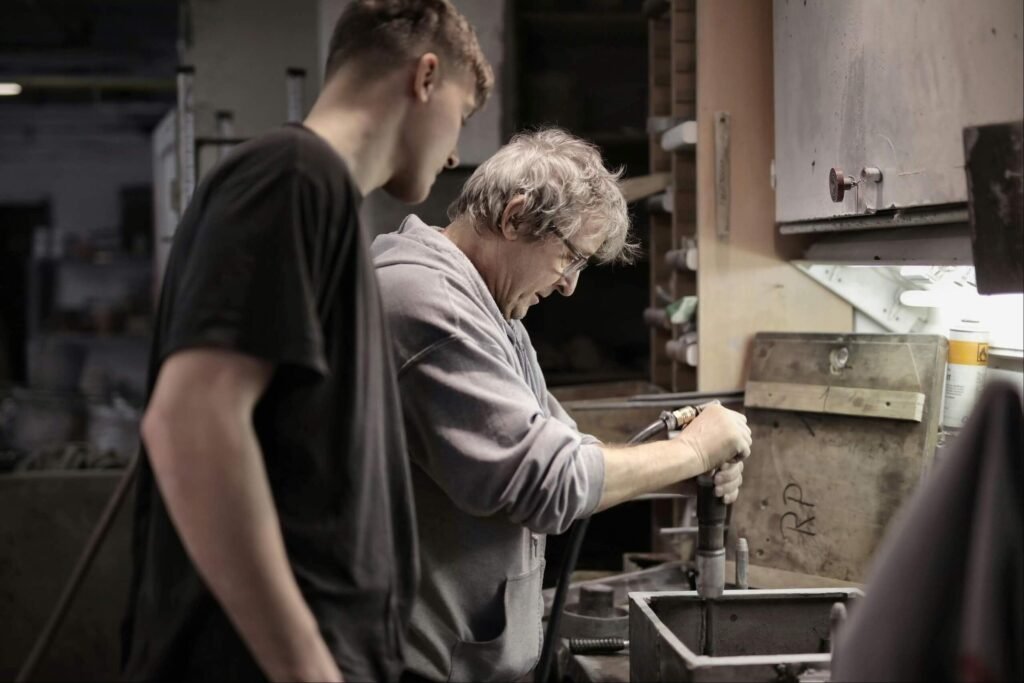
After more than 15 years working as an electrician, I can still remember lessons that never appeared in a textbook.
Somebody showed me a quicker way to set out a job. An experienced electrician explained why a fault that looked obvious might have a completely different cause. A supervisor taught me how to speak to a difficult customer without making the situation worse. Other lessons came from watching people work, asking questions and occasionally making a mistake that I never wanted to repeat.
That is how much of construction knowledge travels. It moves from one person to another in vans, plant rooms, workshops, site cabins and conversations beside the job.
The problem is that this transfer cannot be taken for granted.
Experienced workers are leaving the industry, teams move between projects and people are expected to deliver more in less time. Younger workers may arrive with current qualifications and newer technical skills, yet still need the judgement that develops through seeing real jobs unfold. Without time, trust or structure for people to learn from each other, valuable knowledge quietly walks out of the gate.
The original version of this article placed much of the problem on older workers being afraid to share and younger workers dismissing established methods. Those situations may happen, but they do not explain the whole issue and can reinforce the division we are trying to solve.
This is not a battle between young and old. It is about whether construction creates the conditions for people to teach, listen and keep learning.
The latest CITB Construction Workforce Outlook for 2026 to 2030 estimates that the UK construction workforce will need an average of 41,200 extra workers each year across the forecast period. That is around 206,000 additional workers over five years, taking the total workforce from roughly 2.61 million in 2025 to a projected 2.68 million by 2030.
Those figures are often discussed as a recruitment problem. How do we attract more apprentices, tradespeople, technicians, engineers and managers into construction?
Recruitment is only the beginning. Bringing somebody into the industry does not automatically give them the confidence, experience and support to stay. Replacing a person on a headcount does not replace everything they learned during decades of solving problems.
Construction needs new people and better ways of keeping knowledge inside the industry. That means valuing experienced workers early, giving new entrants proper supervision and recognising those expected to deliver projects while training others.
If knowledge transfer is left until somebody announces their retirement or resignation, the business has already left it too late.
Some construction knowledge is straightforward to record. Drawings, test results, programmes, specifications, manuals and risk assessments all provide important information.
Other knowledge is more difficult to capture because it sits in experience.
An experienced tradesperson may notice that something does not sound right before a fault becomes visible. A site manager may recognise that a sequence will create a clash even though the programme looks fine on paper. Somebody who has worked in occupied homes for years may know how to explain disruption without losing a resident’s trust.
This is sometimes called practical or tacit knowledge, but on site we would probably describe it more simply: knowing the job.
It is built through repetition, mistakes and exposure to different projects. It includes details that rarely make it into a handover: why an approach failed, what warning signs to notice and when a technically correct answer may still create a practical problem.
You cannot download that level of judgement into a new starter during a one-hour induction. It develops through guidance, observation, responsibility and honest reflection over time.
The most common barrier is often not attitude. It is time.
When a programme is under pressure, teaching can feel slower than doing. An experienced worker may think, “It will take me ten minutes to complete this or half an hour to explain it.” Repeated across hundreds of tasks, the learner remains dependent and one person becomes the only trusted problem-solver.
Short-term employment and changing project teams make this harder. Subcontractors can hold essential knowledge while remaining outside the company’s development plans. Lessons learned on one project may never reach the next team.
Status can also get in the way. An experienced person may worry that new technology makes their contribution appear less relevant. A younger worker may be afraid that asking a basic question will make them look incompetent. Somebody in the middle may feel unable to admit they do not know because everyone assumes they should.
Many companies say they value mentoring, but still measure the mentor mainly on output, programme and cost. If explaining a task puts a person behind, the business has unintentionally made knowledge sharing a penalty.
The gap grows through those daily pressures, even when nobody intended to create it.
Terms such as Baby Boomers, Generation X, Millennials and Generation Z can be useful when discussing broad social changes, but they can also become lazy labels.
Not every experienced worker dislikes technology. Not every young person wants to communicate through an app. Some apprentices are confident enough to ask anything, while others remain quiet for months. Some senior tradespeople are patient and generous teachers. Others may know the work brilliantly but struggle to explain what they do.
Age does not tell you somebody’s communication style, ability or attitude.
A worker entering construction at 45 may be older than the person supervising them but completely new to the trade. Somebody in their twenties who began at 16 may already have years of practical experience. A senior manager may hold deep commercial knowledge while a younger engineer understands a new digital system.
The useful question is not, “Which generation are they?” It is, “What do they know, what do they need to learn and what could they teach somebody else?”
That shift removes some of the judgement and allows learning to move in both directions.
Experience is invaluable, but time served does not make every method correct forever.
Construction has changed because people challenged practices that were unsafe, inefficient or unfair. New equipment, stronger safety standards and digital tools have improved how many tasks are delivered.
We should preserve the judgement within experience without automatically preserving every habit around it.
“That is how we have always done it” can contain a valuable lesson, or it can close down a necessary question. A good mentor should be able to explain why a method works, listen when somebody proposes an alternative and be willing to update their own thinking when the evidence supports it.
A new tool should not be adopted simply because it is digital. It must solve a real problem, fit the work and be understood by the people using it.
The strongest teams combine context with curiosity. Experienced people explain what previous projects taught them. Newer workers bring different questions, current training and fresh ways of approaching the problem. Neither side has to lose for the work to improve.
Digital records can make knowledge easier to find. Companies can capture project debriefs, photographs, short videos, technical solutions, common faults and the reasoning behind key decisions. A searchable resource can prevent teams from repeatedly solving the same problem from the beginning.
However, a folder full of files is not a knowledge-sharing culture.
Information becomes outdated when nobody owns it. Lessons-learned documents are saved and forgotten. A database may show what was done while missing the judgement behind the decision.
Digital resources work best when they support human learning. A recorded explanation can prepare somebody before a task, followed by demonstration, supervised practice, questions and feedback.
Learning can also move in the other direction. A younger colleague may help an experienced worker with digital reporting, BIM or mobile inspection tools. That is simply another form of expertise being shared.
Everyone should have the chance to be the teacher and the learner.
Pairing a new starter with an experienced worker can be valuable, but calling somebody a mentor does not automatically create a good relationship.
The mentor needs time, clear expectations and an understanding of their role. The learner needs regular access, clear goals and permission to ask questions. Both should know how progress will be reviewed.
Government guidance on supporting apprentices describes a workplace mentor or coach as a powerful way to help an apprentice settle and thrive. It also makes a useful distinction: the mentor can be separate from the line manager, giving the apprentice somebody to approach when they do not feel comfortable raising an issue through their normal reporting line.
That separation can matter. A learner may hesitate to tell the person assessing them that they are confused or struggling. A trusted mentor gives them another route for support.
Mentoring is skilled work. The best tradesperson or engineer is not automatically the best teacher. Some people need support with explaining tasks, giving feedback and allowing somebody to learn without taking over.
A company that wants good mentors has to develop them, protect time for the role and value the contribution in progression and performance conversations.
Knowledge transfer does not always require a formal programme or hours in a classroom. It can be built into the way ordinary tasks are completed.
Before work begins, the experienced person can explain the purpose, risks and what a good result looks like. They demonstrate the important stages and the learner then completes the task with suitable supervision. Afterwards, both review what went well and what they would do differently.
That last conversation is often missed. Once the task is finished, everybody moves straight onto the next one. Yet a five-minute review can turn an experience into a lesson that the learner can apply elsewhere.
The same principle works at project level. Teams should discuss near misses, programme problems, useful changes and mistakes without turning every review into a search for blame.
People remember stories and real examples. “On the last job, this is what caught us out” may teach more than another page of generic instructions, particularly when it is connected back to the correct standard and safe method.
Some construction workplaces still treat questions as weakness. A new worker asks how to do something and receives, “You should know that already.” After a few responses like that, they stop asking.
The danger is that not knowing does not disappear. It becomes hidden.
The HSE’s guidance for construction workers says people must have the skills, knowledge, training and experience needed for their work, or be in the process of obtaining them. Where they do not yet have the full range, the employer or person controlling the work must provide suitable training and supervision. HSE also warns against relying on a card as the only evidence that somebody is ready for a particular task.
A qualification or card matters, but it cannot show whether the worker has encountered this situation or understood the briefing.
Good teams make it normal to clarify. The supervisor checks understanding instead of asking a quick “Everyone happy?” to a silent room. The worker can say they have not done the task before without being ridiculed. Experienced people can admit uncertainty and seek a second view, showing that competence includes knowing when to stop and ask.
This is where psychological safety becomes practical. It is not about removing standards or protecting people from feedback. It means the truth can surface early enough to act on it.
Knowledge should not flow only from senior roles downwards. Workers closest to a task often see problems that are invisible in an office or planning meeting.
The HSE guidance on involving construction workers makes the point that telling people about risks is different from involving them. When workers have a voice, they can help identify hazards, test whether controls are practical and understand why decisions have been made.
That approach improves knowledge transfer because it treats people as contributors rather than empty containers waiting to be filled. Apprentices can notice inconsistencies. Operatives may understand a process better than the manager reviewing it. A subcontractor who has delivered the same detail across several projects may hold lessons the principal contractor needs to hear.
Consultation does not mean every suggestion must be accepted. It means the idea is considered, the reasoning is explained and useful knowledge is not dismissed because of the person’s age, employer or position.
Respect is what keeps the conversation moving.
There is also an emotional side to this subject that businesses can overlook.
An experienced worker may have built much of their identity around being the person everybody needs. Approaching retirement can raise questions about purpose and relevance. A new entrant may feel that one mistake will confirm they do not belong, while a middle manager tries to support both and deliver the job.
Those experiences deserve curiosity rather than blame.
At Onward Shift, we believe stronger construction cultures begin with human connection. People share more when they feel valued. They ask more when they are not humiliated. They adapt more easily when change is explained and their experience is acknowledged.
Our article on the art of listening in construction explores why listening has to be active rather than another invitation to speak that nobody follows. The same principle applies here. If a business wants people to pass knowledge on, it must be genuinely interested in what they know.
Leaders cannot order trust into existence, but they can remove many of the barriers that stop people learning from each other.
They can identify roles where knowledge is concentrated in one person and begin succession planning early. They can give mentors protected time rather than adding the role to an already impossible workload. They can include subcontractors and site teams in project reviews, not only senior management. They can recognise people who teach well and provide support where communication needs developing.
They can also review whether information is moving. Are new starters gaining independence? Can more than one person complete critical tasks? Are lessons from one project visible on the next? Do workers know who to ask? Are people comfortable admitting that they need help?
The answer will not be found only in the number of training courses completed. It will be visible in how the team works when the job becomes difficult.
For construction companies wanting to strengthen communication, culture and workforce wellbeing, Onward Shift’s support for companies brings together lived-experience speakers, practical toolbox talks, workplace support and free resources designed around the realities of the industry.
Construction is proud of what it leaves behind. Homes, hospitals, schools, railways, workplaces and infrastructure may remain long after the original team has moved on.
The knowledge behind those projects should leave a legacy too.
Experienced workers deserve to know that sharing their skills increases their value; it does not reduce it. Younger workers deserve proper guidance and the freedom to ask questions while they develop.
Everyone in between deserves enough time and support to keep learning as the industry changes.
Bridging the generational gap is not about choosing traditional experience over new ideas, or new technology over the people who built the industry. It is about creating a construction culture where useful knowledge can move in every direction.
Before your most experienced person leaves, ask what only they know. Before judging a new worker, ask what nobody has taken the time to teach them. Before introducing another system, ask whether it will help people understand each other or simply give them somewhere else to store information.
The future of construction will depend on the people who join it, but also on how well we pass forward what previous generations learned. If we get that relationship right, we do more than fill vacancies. We help people become confident, capable and connected enough to build what comes next.
You can explore more conversations about construction culture, leadership and wellbeing through Onward Shift’s free resources.
From Apprentices to CEOs When you picture the construction industry, what comes to mind? For many, it is still rows of men in hi-vis jackets

Here, we delve into the key differences between nutrition and exercise and explore how they synergise to enhance your well-being.

There was a period in my life when being busy felt like proof that I was doing well. I would work long days, miss social

Construction is one of the toughest industries to work in. It’s physically demanding, deadline-driven and often defined by a “just get on with it” culture.

What Maintenance Taught Me About Looking After People Anyone who has worked in maintenance will understand the value of planned preventive maintenance, usually shortened to

In the construction industry, where the focus traditionally lies on physical safety, productivity and project delivery, mental health has often been a neglected topic. However,
If you’re feeling overwhelmed or need someone to talk to, there are organisations that offer free, confidential support for mental health challenges, especially for professionals in high stress industries like construction and engineering. Here are some options available:
Provides a 24/7 confidential listening service for anyone struggling with their mental health or in distress.
A free and confidential text-based crisis support service available 24/7.
The Lighthouse Construction Industry Charity provides vital support to construction workers and their families, offering financial assistance, mental health support, and occupational health advice.
Mates in Mind works to improve mental health awareness within the construction sector. They provide training and resources to help businesses and workers address mental health challenges.
B&CE’s Construction Worker Helpline offers free support and guidance for industry workers facing financial difficulties, stress, or personal challenges. Available from 8am-8pm, 7 days a week.
Provides confidential advice and financial assistance for people working in the electrical industry.
The Rainy Day Trust provides financial assistance and support to those working in the home improvement, construction, and allied trades industries.
CRASH helps homelessness charities and hospices by providing construction-related assistance, offering expertise and materials for vital building projects.
This organisation helps young people discover career opportunities in the construction industry, breaking down stereotypes and offering pathways into the trade.
Offers emotional support and guidance for anyone affected by bereavement.
Provides 24/7 support for individuals struggling with gambling-related issues.
At AA, alcoholics help each other. We will support you. You are not alone. Together, we find strength and hope. You are one step away.
A free listening service for individuals experiencing suicidal thoughts, open from 6pm to midnight daily.
A helpline offering support and information to LGBTQIA+ individuals on topics like mental health, relationships, and identity.
Provides young people with advice and support on topics such as mental health, finances, relationships, and homelessness.
The construction industry can be both rewarding and challenging but no one should have to face difficulties alone. Whether you need financial help, mental health support or career guidance, these organisations are here to assist you. If you or someone you know is struggling, don’t hesitate to reach out. If you found this list helpful, consider sharing it with colleagues or on social media to spread awareness. Let’s build a stronger, healthier construction industry together!
Helping construction, one conversation at a time.
Helping construction, one conversation at a time.
We use cookies to make our website work properly, improve performance and personalise your experience. You can accept all cookies or manage your preferences.