

The Journey of Onward Shift
Have you ever started something with so much passion that you could picture exactly where it was going, only to lose sight of that picture
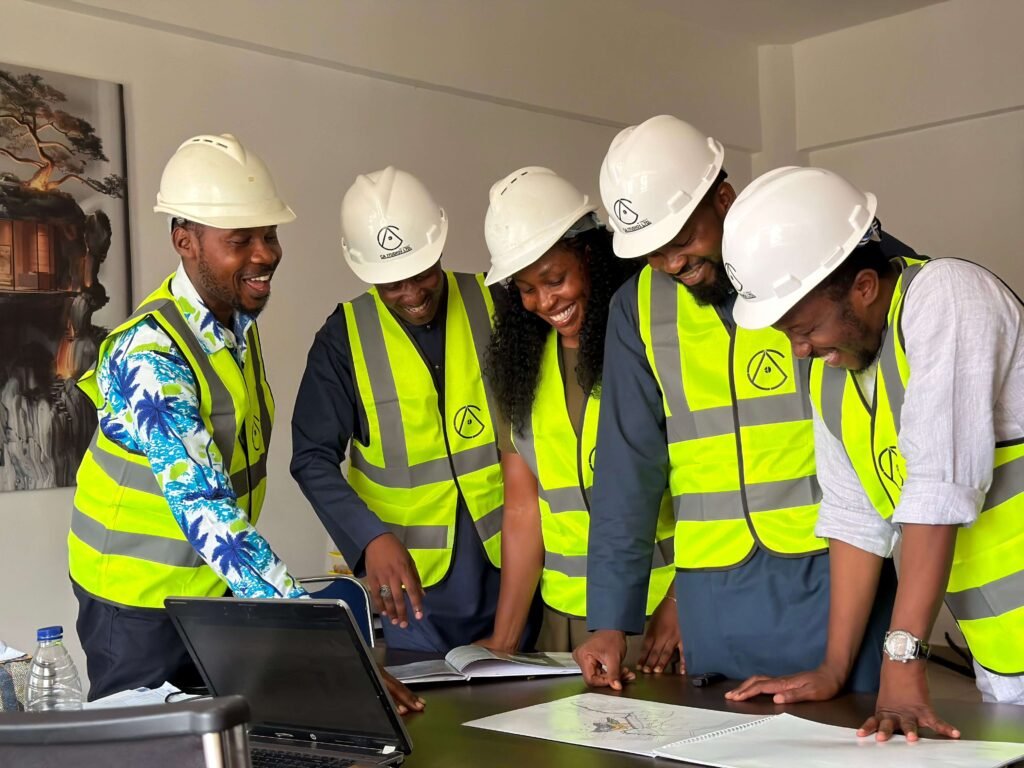
When people talk about the shortage of workers in construction, the conversation usually turns to apprenticeships, training centres, careers advice and how many new entrants the industry needs. All of those things matter, but there is another question we do not ask often enough.
What kind of industry are we inviting people into?
I recently shared a LinkedIn post about passing my probation at work. It should have felt exciting, but part of me felt relieved. During those first months, I had heard comments about my name, my Indian heritage, the way Indian people supposedly speak and whether the woman I am marrying was being “shipped in”. Each could be dismissed as humour or curiosity. Together, they made me conscious that I was being judged as something other than an electrician trying to do a good job.
My experience does not represent every ethnic-minority worker or workplace, but it raised a contradiction construction cannot ignore. The industry desperately needs people while some already inside it are still made to feel like outsiders.
If we want to solve the UK construction skills shortage, recruitment cannot be the whole plan. We also have to create workplaces where women, ethnic-minority workers, disabled and neurodivergent people, LGBTQ+ colleagues, people of different faiths and people from different social backgrounds can enter, contribute, progress and stay.
Equality and diversity are not separate from the workforce problem. They are part of the answer to it.
The latest figures show why this conversation is urgent. According to CITB’s Construction Workforce Outlook for 2026 to 2030, the UK will need an average of 41,200 extra construction workers each year. That is around 206,000 additional workers over five years. The total workforce is forecast to reach approximately 2.68 million by 2030.
This is not simply about expansion. The estimate includes the workers required to support growth, replace people leaving and maintain enough capacity as the workforce changes. CITB’s 2026 UK Construction Industry Picture reported that around 24% of construction workers were already aged over 55 in 2023, compared with approximately 13% in 2000. The average worker was over 42, with many experienced people expected to retire within the following five to ten years.
Employers are already feeling the pressure. The Government’s Employer Skills Survey 2024 found that 45% of construction vacancies were skill-shortage vacancies: roles that were difficult to fill because applicants lacked the required skills, qualifications or experience. That was the highest proportion recorded across the sectors in the survey.
The Government has now published a national Construction Jobs Plan, while the industry is trying to deliver new housing, infrastructure, repairs, maintenance, retrofit and the move towards lower-carbon buildings. We cannot meet that demand by repeatedly recruiting from the same part of the population and hoping the numbers somehow improve.
It would be easy to assume that the next generation has no interest in the industry, but the evidence is more hopeful than that. CIOB’s Attitudes Towards Construction Careers 2026 research surveyed 2,000 people aged 16 to 24 across the UK. Two-thirds, or 66%, held a positive view of construction careers, yet only 30% said they would consider working in the sector.
That gap matters. It suggests construction is not starting from complete rejection. Many young people can see something positive in the industry, but far fewer can picture themselves belonging within it.
The same study found that 45% said construction had not been included in their careers advice, while 26% did not believe construction careers were accessible to young people. CITB has also found that recruitment often depends on informal networks and word of mouth. If entry depends on an uncle, neighbour or family friend already being on the tools, a capable young person outside that circle begins several steps behind.
We should improve careers advice, apprenticeships, work placements and the link between college and employment. But access is also about who hears of the opportunity, who is judged as having the “right attitude”, who receives their first chance and what happens once they arrive.
The figures on representation do not mean that every group must appear in every company in exactly the same proportion as the wider population. They do, however, show how much talent construction may still be missing.
CIOB’s current equality, diversity and inclusion policy position says women make up around 15% of the UK construction workforce and approximately 2% of onsite roles. Census 2021 data analysed by the Office for National Statistics found that 99% of bricklayers were men. This is not because women lack the ability to lay bricks, manage sites, design buildings or lead businesses. It tells us something about the routes in, the image of the industry, working practices and the culture people expect to encounter.
Ethnic representation shows a similar gap. CITB’s 2022 UK-wide Workforce Skills and Mobility survey, based on 3,005 construction workers, estimated that 7% came from ethnic-minority backgrounds, compared with 14% of the UK working-age population used in the study. The position varied greatly by region, but even London’s construction workforce was far less ethnically diverse than the city’s working-age population.
Representation becomes narrower higher up. Figures from ONS employment data reported by Construction Management in 2020 indicated that just 1% of directors and senior managers in UK construction were Black, while 94.9% were White. This is an older snapshot, so it should not be presented as the exact position in 2026. It remains important because it shows how recently the people making senior decisions represented such a limited range of backgrounds.
Disability is another part of the talent pool that can be overlooked. CIOB cites disabled employees as around 6% of the construction workforce. By comparison, the Government’s Employment of Disabled People 2025 release found that nearly one in four working-age people in the UK were classed as disabled in the second quarter of 2025. These figures come from different datasets and are not a perfect like-for-like comparison, but the wider evidence also identified construction as one of the industries in which disabled workers were under-represented.
Some disabilities are visible and others are not. The same is true of neurodivergence, long-term health conditions and mental health difficulties. A person may need a physical adjustment, clearer written instructions, a different communication style, predictable planning or flexibility for treatment. None of that tells us whether they can become an excellent electrician, engineer, surveyor, planner or project manager.
Recruitment figures tell us who enters. Culture often decides who stays.
CIOB reports that 60% of LGBTQ+ construction employees have experienced homophobic or derogatory terms at work. A separate BAM survey in 2024, based on three LinkedIn polls with more than 700 votes, found that 47% of respondents did not think construction was an accepting industry for LGBTQ+ people to work in. A LinkedIn poll is not a representative workforce study, but alongside the wider evidence it shows why some people may look at construction and question whether they will be able to be themselves.
The evidence around racism is equally difficult to dismiss. In a 2021 Institution of Civil Engineers survey of 2,110 UK members, 81% of Black and minority-ethnic respondents cited some degree of racism in the workplace. Importantly, this was not a concern seen only by those directly affected: 61% of White British respondents also saw evidence of workplace racism. Across all respondents, four in five believed racism was present within civil engineering and its projects.
Women’s experiences also show why simply opening more vacancies will not be enough. In Unite’s 2025 survey of women members working in construction, 70% of respondents reported being on the receiving end of sexually offensive jokes. Among those who had experienced sexual harassment, 76% had not reported it, and only 8% said management had addressed or tackled the issue. This was a union survey rather than a census of every woman in construction, but the findings are serious enough that no responsible employer should brush them aside.
These figures describe workplaces in which people may monitor what they say, hide part of themselves or decide progression is not worth the cost. Some will tolerate it. Others will move company, leave construction or advise somebody like them not to join.
An industry cannot solve a labour shortage if it recruits people through the front door while workplace culture quietly pushes them out of the side.
Construction understands physical safety better than most industries. We plan work, assess risk, use permits, inspect equipment and investigate incidents because hoping nothing goes wrong is not a control measure.
We need some of that same seriousness when it comes to how people are treated.
A safer, inclusive workplace is not one where humour disappears and everybody fears the wrong word. It is one where curiosity is respectful, mistakes can be corrected and nobody accepts humiliation as the price of fitting in.
There is a difference between respectfully asking about somebody’s culture and reducing them to a stereotype. There is a difference between trusted banter and repeatedly targeting somebody because of their race, sex, sexuality, disability, religion or accent. Intent matters, but so does impact. “I was only joking” cannot be a permanent escape from responsibility.
The word safety is important because people need confidence that raising a concern will not cost them work, promotion or acceptance within the team. They need to know that the standard applies to a high-performing manager, a long-serving tradesperson, an agency worker, a subcontractor and a client. If the company’s values disappear whenever the person responsible is commercially useful, the workforce will understand the real rule very quickly.
One of the fears surrounding equality and diversity is that people will be hired to fill a target rather than because they can do the job. That is not what a serious approach should look like.
Construction cannot afford lower standards. Competence, safety, quality and accountability must remain central. Equality means capable people have a fair opportunity to enter and progress, and that unnecessary barriers are not mistaken for proof of ability. Diversity means the workforce includes people with different identities, experiences and ways of seeing a problem. Inclusion means those people are respected, heard and able to contribute once they are there.
Treating everybody identically is not always the same as treating them fairly. Female workers need PPE designed to fit their bodies. A disabled worker may need a reasonable adjustment. Somebody observing a religious practice may need a practical conversation about working arrangements. A neurodivergent apprentice may understand a task more safely through clear written steps rather than a rushed verbal instruction. The required standard can remain exactly the same while the route that helps somebody reach it changes.
This is not special treatment. It is sensible management.
Diversity is sometimes discussed as though the main benefit is making the company photograph look more representative. The real value is much deeper.
The built environment is used by everybody. Homes, hospitals, schools, transport, public spaces and workplaces have to serve people of different ages, bodies, cultures, families and needs. When decisions are made by people whose life experiences are broadly similar, important questions may never be asked. A colleague who has experienced disability may notice an accessibility problem. Somebody from a multigenerational household may understand how a housing layout will work differently. A worker who speaks another language may build trust with part of a community or supply chain. Somebody who entered through a non-traditional route may challenge a process that has survived mainly because “that is how we have always done it”.
Nobody should represent an entire gender, ethnicity, religion or community. Diversity does not automatically improve every decision. It increases the knowledge in the room; inclusion determines whether that knowledge is heard.
Construction already depends on people with different skills solving problems together. Valuing different life experiences is an extension of that strength, not a rejection of the industry’s identity.
Companies can examine who applies, is hired, receives training, progresses and leaves. Data must be handled confidentially and carefully, particularly in small teams, but it can reveal where the door narrows. A business celebrating diverse recruitment while repeatedly losing those employees within a year has not solved the problem.
Recruitment also needs to reach beyond the familiar network. That can include stronger relationships with colleges, community organisations, return-to-work programmes and groups representing people who are under-represented in construction. Job descriptions should explain the actual skills required rather than describe an idealised person who resembles whoever held the role before. Work experience and apprenticeships must connect to real jobs, otherwise the industry keeps asking for experienced people while denying newcomers the chance to gain experience.
Suitable PPE, secure welfare facilities, accessible spaces and reasonable adjustments show who was considered when the job was planned. Working patterns, travel and unnecessary inflexibility can exclude good people with caring responsibilities, health needs or disabilities before their ability is tested.
Behavioural standards have to be clear and consistent. This does not require a rulebook for every possible sentence. It requires leaders and managers who can recognise when banter has become targeting, respond to concerns without becoming defensive and challenge behaviour regardless of who is responsible. The aim is not to punish every clumsy question. It is to stop repeated disrespect becoming normal.
Progression matters as much as entry. Mentoring, transparent promotion criteria, access to development and visible leaders from different backgrounds can help people see a future in the industry. The 1% Black senior-leadership figure from 2020 matters partly because people look upwards when deciding whether effort is likely to lead somewhere.
Finally, companies need to keep listening. Inclusion cannot be measured only by whether a policy exists or a course was delivered. The better questions are whether people trust the process, feel able to report concerns, receive fair access to opportunity and would recommend construction to somebody from their own background.
Conversations about racism, sexism, sexuality, disability and privilege can feel uncomfortable. People worry about saying the wrong thing, being blamed for something they did not intend or having their own hardships dismissed. That discomfort is real, but avoiding the subject leaves the people experiencing the problem to carry it alone.
These discussions do not need to begin with the assumption that everybody is a bad person. They can begin with curiosity: what happened, how did it affect the person, what made it possible, what needs to change and how do we stop it happening again? We can challenge a comment without declaring that somebody is beyond learning. We can acknowledge different experiences without turning suffering into a competition.
Onward Shift has started expanding its specialist construction workshops and presentations to support conversations around inclusion, diversity, racism and related workplace culture, alongside mental health and wellbeing. The purpose is not to arrive with a lecture or promise that one session will fix a company. It is to help teams explore difficult subjects with clearer language, practical understanding and room for honest discussion. Organisations looking more broadly at their workforce can also explore Onward Shift’s support for construction companies and its growing collection of free construction mental health resources.
A workshop can open a conversation. Leadership behaviour, fair systems and what happens afterwards determine whether it leads anywhere.
The UK needs around 206,000 additional construction workers between 2026 and 2030. That number is not an anonymous crowd waiting outside the gates. It includes young people who have never been shown the range of construction careers, women who cannot yet picture themselves on site, ethnic-minority workers who are tired of being treated as outsiders, disabled and neurodivergent people whose abilities are missed, LGBTQ+ colleagues who want to work without hiding who they are, career changers, parents, older workers and people whose route into the industry will not look traditional.
Different upbringings, cultures and ways of life do not weaken construction. They bring new knowledge into an industry whose entire purpose is to build for society.
The challenge is not simply persuading more people to join. It is making sure the opportunity is genuine when they arrive. That means widening the doorway, holding the same high standards fairly, challenging behaviour that drives good people away and building workplaces where difference is not something to survive.
Construction has an enormous workforce challenge, but it also has an enormous opportunity. If we become better at seeing talent in people who have historically been overlooked, and better at creating places where they can stay and progress, we will not only make the industry more equal. We will give it a stronger chance of building everything the country is asking it to deliver.
Have you ever started something with so much passion that you could picture exactly where it was going, only to lose sight of that picture
Imagine a project team that has spent months working under a difficult client, dealing with changing instructions and constant pressure to recover time. People are

Male Suicide in Construction Is Still Being Misunderstood If you work in construction, you’ve probably heard the statistic by now. Suicide is one of the

Here, we delve into the key differences between nutrition and exercise and explore how they synergise to enhance your well-being.

For years, certain parts of working life seemed to take more out of me than other people. I could solve problems on the tools and

Construction has always valued resilience. We admire the people who turn up in every kind of weather, solve problems under pressure and keep projects moving
If you’re feeling overwhelmed or need someone to talk to, there are organisations that offer free, confidential support for mental health challenges, especially for professionals in high stress industries like construction and engineering. Here are some options available:
Provides a 24/7 confidential listening service for anyone struggling with their mental health or in distress.
A free and confidential text-based crisis support service available 24/7.
The Lighthouse Construction Industry Charity provides vital support to construction workers and their families, offering financial assistance, mental health support, and occupational health advice.
Mates in Mind works to improve mental health awareness within the construction sector. They provide training and resources to help businesses and workers address mental health challenges.
B&CE’s Construction Worker Helpline offers free support and guidance for industry workers facing financial difficulties, stress, or personal challenges. Available from 8am-8pm, 7 days a week.
Provides confidential advice and financial assistance for people working in the electrical industry.
The Rainy Day Trust provides financial assistance and support to those working in the home improvement, construction, and allied trades industries.
CRASH helps homelessness charities and hospices by providing construction-related assistance, offering expertise and materials for vital building projects.
This organisation helps young people discover career opportunities in the construction industry, breaking down stereotypes and offering pathways into the trade.
Offers emotional support and guidance for anyone affected by bereavement.
Provides 24/7 support for individuals struggling with gambling-related issues.
At AA, alcoholics help each other. We will support you. You are not alone. Together, we find strength and hope. You are one step away.
A free listening service for individuals experiencing suicidal thoughts, open from 6pm to midnight daily.
A helpline offering support and information to LGBTQIA+ individuals on topics like mental health, relationships, and identity.
Provides young people with advice and support on topics such as mental health, finances, relationships, and homelessness.
The construction industry can be both rewarding and challenging but no one should have to face difficulties alone. Whether you need financial help, mental health support or career guidance, these organisations are here to assist you. If you or someone you know is struggling, don’t hesitate to reach out. If you found this list helpful, consider sharing it with colleagues or on social media to spread awareness. Let’s build a stronger, healthier construction industry together!
Helping construction, one conversation at a time.
Helping construction, one conversation at a time.
We use cookies to make our website work properly, improve performance and personalise your experience. You can accept all cookies or manage your preferences.