

Tips for ADHD in the Workplace: Daily Challenges and Finding Balance in Construction
For years, certain parts of working life seemed to take more out of me than other people. I could solve problems on the tools and

There was a period in my life when being busy felt like proof that I was doing well.
I would work long days, miss social events and carry on even when I was exhausted. If my phone kept ringing, the diary was full and there was another job waiting, I took that as a sign of progress. Rest felt unproductive. Saying no felt like turning away an opportunity. Slowing down seemed like something I could do later, once I had reached the next target.
I was proud of being able to keep going. I liked the idea that I was a machine, because machines do not need to explain that they are tired, overwhelmed or running low. They simply carry on until the job is finished.
The problem is that people are not machines. Even machines need to be switched off, serviced and repaired. I spent years working in construction, so I understood that principle when it came to tools and equipment. It took me much longer to apply it to myself.
Looking back, the hardest part is knowing that time does not rewind. The jobs I completed mattered and the business I built mattered, but so did the family gatherings, conversations and ordinary moments I missed while telling myself that there would always be another chance. Work can be repeated. A particular evening with the people you love cannot.
That does not mean I regret working hard or having ambition. Both have shaped my life and helped me create opportunities I once could not imagine. What I question now is the belief that exhaustion is evidence of commitment and that a full diary automatically means a full life.
When people hear the words “hustle culture”, they may picture social media personalities talking about waking up at 5am, working while everyone else sleeps and sacrificing comfort for success. For many people in construction, waking up early is not a motivational routine. It is simply Tuesday.
The alarm goes off while it is still dark. There may be an hour or more of travelling before the working day even starts. Then comes the physical work, the noise, the deadlines, the pressure to avoid delays and the need to stay alert around genuine safety risks. Once the site work ends, there is still the drive home, paperwork, messages and whatever life is waiting on the other side of the front door.
For a sole trader or small business owner, the boundary becomes even less clear. The working day may begin on site, but it continues through evening quotations, invoices, material orders, customer calls and chasing payments. A missed call feels like lost work. A weekend without taking on an extra job can feel like money being left behind. Even when you are physically at home, part of your mind is still in the van, on the project or inside the business account.
None of this looks glamorous. There is no dramatic speech or perfectly edited video. It is someone answering a customer from the sofa at 9pm, trying to finish a quote while their partner is talking to them or lying in bed mentally pricing tomorrow’s job.
That is how hustle culture often appears in construction: not as a slogan, but as an inability to switch off.
Construction has always required effort. Projects have busy periods, deadlines tighten and occasionally a long day is unavoidable. Running a business also involves risk, responsibility and times when more is demanded of you. Pretending otherwise would make this conversation unrealistic.
The difference is whether the pressure has a boundary. A demanding week followed by proper recovery is very different from living as though every week is an emergency. Working late to finish an important stage is different from assuming that evenings never belong to you. Taking an opportunity because it matters is different from accepting everything because you are frightened that saying no will make you irrelevant.
Healthy ambition still leaves room for judgment. You can decide when extra effort is worth it, understand what it will cost and plan how you will recover. Hustle culture removes that choice. It tells you that more is always better and that stopping, even briefly, means someone else is getting ahead.
This mindset can be especially powerful in the trades because reliability matters. We want to be known as the person who turns up, solves the problem and does not let anyone down. That is a good quality until keeping every promise to everyone else means repeatedly breaking promises to yourself and the people closest to you.
Busyness gives us something immediate. We can see the completed jobs, sent emails and money coming in. It provides movement, structure and, in some cases, an escape from thoughts or feelings we would rather avoid.
It also brings recognition. People call us hardworking, driven and dependable. Those words feel good, particularly if we have built our identity around being useful. When work is going well, praise can make the sacrifices seem worthwhile. When work is not going well, doing even more can feel like the only answer.
Social media strengthens this. We see the new van, the expanding team, the large contract and the early-morning gym photo. We rarely see the unpaid invoices, the strained relationship, the anxiety on Sunday evening or the person staring at a screen without being able to think clearly. We compare the private reality of our own life with the public highlights of somebody else’s.
There is another side to busyness too: it saves us from deciding what enough looks like. If success is always one more client, one more project or one more income target away, we never have to stop and ask whether the life we are building is one we actually enjoy.
That question can be uncomfortable. It was for me. I had to recognise that some of what I called ambition was fear: fear of missing an opportunity, losing momentum, disappointing someone or going backwards. Working harder felt easier than sitting with that uncertainty.
Overwork rarely arrives with a clear announcement. It builds through small changes that are easy to explain away. Sleep becomes lighter. Patience becomes shorter. You read the same email three times and still do not take it in. A minor problem feels much bigger than it should. You stop enjoying the work you once cared about and begin resenting people for asking things of you, even though you have continued saying yes.
The World Health Organization describes burnout as an occupational phenomenon caused by chronic workplace stress that has not been successfully managed. It is associated with exhaustion, growing mental distance or negativity towards work and reduced professional effectiveness. That description matters because burnout is often mistaken for ordinary tiredness. A good night’s sleep may help tiredness. Burnout is usually connected to a pattern that needs to change.
The scale of work-related strain goes far beyond a few people who need to organise their time better. The Health and Safety Executive’s latest figures show that 964,000 workers in Great Britain experienced work-related stress, depression or anxiety in 2024/25. These conditions made up just over half of all self-reported work-related ill health.
A 2026 government survey of employees and self-employed workers found that 58% had worked during the previous year despite not feeling well enough to do so. That finding will feel familiar to many people in construction. We turn up with injuries, illness, exhaustion and personal problems because somebody is relying on us and because missing work can mean losing money.
There is pride in being dependable, but there is also risk in continually overriding what your mind and body are telling you. Concentration, patience and judgment matter in every workplace. On a construction site, they can be the difference between noticing a hazard and missing it.
When you own a small business, rest is rarely as simple as closing the laptop. There may be no one else to answer the phone, price the work or deal with a problem. If you are not earning, you may still be paying for vehicles, insurance, tools, software, wages and materials. Late payments create pressure that follows you home.
I understand why business owners keep going. When I ran my electrical business, every enquiry mattered because I had built something from the ground up. Reputation mattered. Customer service mattered. The next opportunity could lead somewhere significant, and it was hard to know which one would.
That level of responsibility can create the feeling that everything is urgent. The business begins borrowing time from evenings, weekends, relationships and sleep. At first, it may seem temporary. You tell yourself you will slow down when the current project ends, the cash flow improves or the business reaches a certain size.
The finish line then moves. More work brings more administration. A larger client brings larger expectations. Taking on staff can reduce one type of pressure while adding another. Without deliberate boundaries, the quieter period you are waiting for may never arrive.
The answer is not to pretend business ownership can be completely stress-free. It is to stop treating constant personal sacrifice as the only serious way to run a business. A company that depends on one exhausted person responding at all hours is vulnerable, however successful it may appear.
Work-life balance is sometimes presented as though every day should be divided neatly between work, family, rest and hobbies. Real life does not operate that cleanly, especially in construction.
Balance is better understood across time. There will be weeks when work needs more from you. A handover, urgent repair or new business opportunity may deserve extra attention. The important part is recognising that this is a demanding period rather than allowing it to become your permanent setting.
Recovery needs to be planned with the same seriousness as the work. If you know a project will require several long days, what will you reduce elsewhere? When will you properly stop? Who needs to know that you will be less available? How will you avoid accepting another demanding commitment immediately afterwards?
This way of thinking replaces vague promises to rest “when things settle down” with an actual decision. It also accepts that balance will look different for different people. Someone with young children, caring responsibilities, health needs or a long commute may have less spare capacity than a colleague doing the same role. Comparing output without understanding context tells us very little.
One of the most useful things we can do is define enough before exhaustion defines it for us.
For a tradesperson, that might mean deciding how many jobs can be completed properly in a week without every evening being lost to paperwork. For a business owner, it may involve setting an income target that supports the life they want rather than endlessly chasing growth. For a manager, it could mean being honest about the number of people and hours a programme genuinely requires.
Knowing what enough looks like makes saying no more practical. You are no longer refusing work because you lack ambition. You are protecting the quality of the work already agreed, your ability to think clearly and the parts of life that matter beyond the job.
This also means examining the way work is organised. Some people need better boundaries around their phone. Others need to price jobs more realistically so they are not relying on impossible volumes. A business owner may need to delegate bookkeeping or administration rather than holding every task. A worker may need to speak with their manager about an unsustainable workload instead of assuming they should be able to cope indefinitely.
Small boundaries are easier to keep when they are visible. A clear finishing time, one evening without work messages, a protected day off or a rule that quotations are handled during set hours gives the mind a genuine stopping point. The boundary will not always hold perfectly, but it creates something to return to when work begins spreading again.
Rest has often been framed as the reward we receive after everything is complete. The problem is that everything is never complete. There will always be another snag, enquiry, email or idea.
Rest supports the work itself. Sleep improves attention and decision-making. Time away can help us return to a problem with a clearer view. Relationships and interests outside work remind us that our identity is broader than our job title or business turnover.
This does not require expensive retreats or complicated routines. It might be a walk without taking business calls, dinner with the phone in another room, an evening spent with family or enough sleep to start the next day properly. The value is in being present rather than physically away from work while mentally remaining there.
Guilt may still appear. If you have spent years linking your worth to productivity, a quiet afternoon can initially feel uncomfortable. That discomfort does not prove you should be working. It may simply show how unfamiliar rest has become.
Conversations about balance often focus on what individuals should do: sleep more, exercise, meditate and manage their time. These things can help, but they cannot repair a workload that is impossible, poor planning, unclear responsibilities or a culture where every request is treated as urgent.
The HSE Management Standards identify six areas of work design connected to stress: demands, control, support, relationships, role and change. This gives construction companies a far more useful starting point than telling people to become more resilient. It asks whether workloads are achievable, whether workers have appropriate control, whether support is available and whether people understand what is expected of them.
Employers also have a legal duty to assess and act on the risk of work-related stress, just as they assess other health and safety risks. A wellbeing talk can start a conversation, but it cannot replace action on the conditions creating the pressure.
Leaders influence hustle culture through what they praise and what they model. If the person sending emails at midnight is always celebrated, others learn that constant availability is the route to recognition. If managers take proper breaks, plan realistic workloads and respond constructively when someone raises a concern, they give people permission to work in a more sustainable way.
Sometimes we know our routine is unsustainable but cannot see how to change it. The responsibilities are real, and advice such as “just work less” can feel completely disconnected from the situation.
This is where the right support can help. Coaching through Onward Shift can provide a structured space to examine priorities, business pressures, career decisions, confidence and boundaries. A coach will not run your business or make decisions for you, but they can help you step outside the daily noise and work out what needs to change.
If overwork is connected to deeper distress, anxiety, low mood, grief, trauma or experiences that feel difficult to manage, counselling may be the more suitable route. Coaching and counselling serve different purposes, and neither should be presented as a quick fix. The important thing is finding support that matches what you are facing.
For employers, Onward Shift’s support for construction companies includes talks, toolbox talks and workplace wellbeing support designed to help turn awareness into an ongoing conversation. The organisation still has to examine workload, planning and culture, but external support can help create the opening and give managers and workers a shared language.
I still believe in working hard. I still have goals, and I know meaningful work sometimes asks a lot of us. What has changed is my willingness to treat exhaustion as proof that I care.
Success now has to include the life around the work. It includes being able to enjoy what I have built, spend time with the people I love and recognise when my mind or body needs attention. It includes having enough energy left to be present, rather than giving every useful part of myself to the working day.
There will always be another target. There will always be somebody online who appears to be moving faster. Their pace does not have to become yours.
If your work is taking over every part of your life, the answer may not be a dramatic change tomorrow. Start by noticing where the boundary has disappeared. Look at what you keep calling temporary. Decide what enough could realistically mean and speak to someone who can help you see the situation clearly.
The aim is not to remove ambition from your life. It is to make sure you are still there to experience the life that ambition is supposed to build.

For years, certain parts of working life seemed to take more out of me than other people. I could solve problems on the tools and
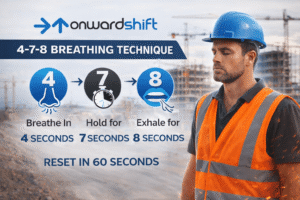
How to Regain Control in 60 Seconds Seven years ago, I was sitting in a therapist’s room feeling like my body had decided to turn

You start a project expecting pressure. The programme is tight, several trades are working on top of one another and the client wants answers quickly.

Here, we delve into the key differences between nutrition and exercise and explore how they synergise to enhance your well-being.

Construction is built around solving problems. If something is not level, you adjust it. If a circuit is faulty, you test it. If the programme

Male Suicide in Construction Is Still Being Misunderstood If you work in construction, you’ve probably heard the statistic by now. Suicide is one of the
If you’re feeling overwhelmed or need someone to talk to, there are organisations that offer free, confidential support for mental health challenges, especially for professionals in high stress industries like construction and engineering. Here are some options available:
Provides a 24/7 confidential listening service for anyone struggling with their mental health or in distress.
A free and confidential text-based crisis support service available 24/7.
The Lighthouse Construction Industry Charity provides vital support to construction workers and their families, offering financial assistance, mental health support, and occupational health advice.
Mates in Mind works to improve mental health awareness within the construction sector. They provide training and resources to help businesses and workers address mental health challenges.
B&CE’s Construction Worker Helpline offers free support and guidance for industry workers facing financial difficulties, stress, or personal challenges. Available from 8am-8pm, 7 days a week.
Provides confidential advice and financial assistance for people working in the electrical industry.
The Rainy Day Trust provides financial assistance and support to those working in the home improvement, construction, and allied trades industries.
CRASH helps homelessness charities and hospices by providing construction-related assistance, offering expertise and materials for vital building projects.
This organisation helps young people discover career opportunities in the construction industry, breaking down stereotypes and offering pathways into the trade.
Offers emotional support and guidance for anyone affected by bereavement.
Provides 24/7 support for individuals struggling with gambling-related issues.
At AA, alcoholics help each other. We will support you. You are not alone. Together, we find strength and hope. You are one step away.
A free listening service for individuals experiencing suicidal thoughts, open from 6pm to midnight daily.
A helpline offering support and information to LGBTQIA+ individuals on topics like mental health, relationships, and identity.
Provides young people with advice and support on topics such as mental health, finances, relationships, and homelessness.
The construction industry can be both rewarding and challenging but no one should have to face difficulties alone. Whether you need financial help, mental health support or career guidance, these organisations are here to assist you. If you or someone you know is struggling, don’t hesitate to reach out. If you found this list helpful, consider sharing it with colleagues or on social media to spread awareness. Let’s build a stronger, healthier construction industry together!
Helping construction, one conversation at a time.
Helping construction, one conversation at a time.
We use cookies to make our website work properly, improve performance and personalise your experience. You can accept all cookies or manage your preferences.