

Coaching and Counselling in the Construction Industry: Understanding the Key Differences and Benefits
Imagine two people leaving the same construction site at the end of the day. One has recently been promoted and is struggling to lead people
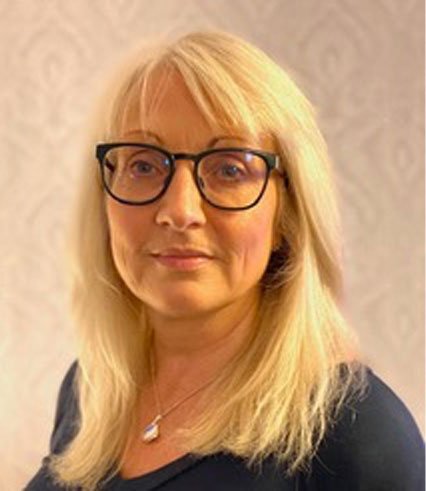
I’m Jill Morrow, a Neurodiversity Coach with more than 20 years’ experience across coaching, personal development and workplace psychology.
Earlier in my career, I worked in the business world designing and delivering leadership and management development programmes before moving into consultancy and coach training at Henley Business School. Over time, my interest increasingly moved towards neuroscience, executive functioning and neurodiversity, leading me to train as an Executive Functions Coach and work with neurodivergent adults.
My approach is practical, person-centred and collaborative. I support people who may be finding areas such as organisation, planning, time management, routines, focus, competing demands or everyday executive functioning difficult.
Rather than expecting everyone to work in the same way, coaching gives us space to understand how you work, what tends to create difficulties and which strategies may fit more naturally into your life.
I’m also a parent to three sons with experiences of ADHD, dyslexia and autism. That personal experience has given me another perspective on how differently neurodivergence can show up from one person to another and reinforced for me that there is rarely one solution that works for everyone.
My role is not to tell you how you should manage your life. We work together to build greater self-awareness, explore practical approaches and identify small changes that can make everyday tasks feel more manageable.
Whether you want support with structure, routines, organisation, confidence or understanding your own way of working better, the focus is on finding strategies that are realistic for you and your circumstances.
Jill provided Strategy Coaching to help me manage the impact my Dyslexia and ADHD, at a time where the latter has only just come to light, so I am still in the process of understanding it and putting coping mechanisms into place. Jill’s coaching, knowledge and empathy helped me to understand that what I was experiencing was normal, that I wasn’t alone and that with some adjustments I could harness to my advantage, whilst also being kind to myself. Thro9ugh considered questioning Jill helped me unlock approaches that worked for me, addressed the specific issues I was facing and helped me see a wide range of possibilities. Having reflected at the end of our sessions I can see a night and day difference in my approach to work and the systems I need in place to make the most of my particular challenges – I have even had feedback that is evidence of the impact it has had on the way I interact and the benefits that has for others in my team. I am so grateful to Jill and the work we did together – she has left a mark on me that I and others will benefit from for years to come.
From historical counselling to current day for various different reasons, this is by far the most useful set of sessions I’ve had. Thank you, Jill, for helping me not only with skills to take forward to improve my communication skills and focus, but you’ve given me an understanding of how my condition works and how that relates to me, more than any book could do. You’ve made a significant difference to my life, not just in work, and I feel equipped to be successful with the tools you’ve given me. Thank you!
Since undergoing coaching, my confidence and self-esteem have massively increased as I have been able to discuss and devise strategies to allow me to work more efficiently and expose ableism that came as a result of being undiagnosed. My coach has helped me to see the hidden strengths that my neurodiversity has given me, which I have since recognised and used in the workplace.
Thank you so much to my strategy coach, Jill. The diagnosis and strategy coaching has genuinely been a massive turning point in my confidence and life.
Yes. Your sessions are treated as confidential and our coaches and counsellors are expected to follow appropriate professional confidentiality standards.
There may be limited circumstances where information needs to be shared, such as where there is a serious concern about safety or where disclosure is required by law. Your provider can explain their confidentiality arrangements at the start of your work together.
That’s completely okay. The relationship you have with your coach or counsellor matters, and sometimes the first person you speak to won’t feel like the right fit.
If that happens, let us know and we’ll help you explore another provider.
We keep pricing simple and transparent.
Every session will be different depending on whether you choose coaching or counselling and the provider you work with.
You can expect a confidential, non-judgemental space where you have time to talk openly about what is going on for you. A coach may focus more on goals, change and practical next steps, while counselling may give you space to explore your thoughts, feelings and experiences in greater depth.
Your provider will work at a pace that feels appropriate for you.
Sessions usually last 50–60 minutes and can be:
Coaching is generally more focused on where you are now, where you would like to get to and the changes you want to make. Counselling provides space to explore emotions, experiences and difficulties in greater depth.
There is no fixed script. Your sessions should develop around what you need and what you feel comfortable discussing.
Email: jo*****@*********ft.com
We’ll get back to you as soon as possible.
Imagine two people leaving the same construction site at the end of the day. One has recently been promoted and is struggling to lead people

People sometimes ask me whether I see ADHD as a superpower or a burden. My honest answer is that it depends on the day. There

Can Coaching Improve Your Mental Health? What Good Coaching Can and Cannot Do Coaching can support your mental wellbeing, but we need to be honest

For years, certain parts of working life seemed to take more out of me than other people. I could solve problems on the tools and
Helping construction, one conversation at a time.
Helping construction, one conversation at a time.
We use cookies to make our website work properly, improve performance and personalise your experience. You can accept all cookies or manage your preferences.