

The Ripple Effect of Workplace Accidents
Workplace safety is often viewed in terms of compliance and statistics. However, behind every workplace accident is a human story often one of pain, perseverance
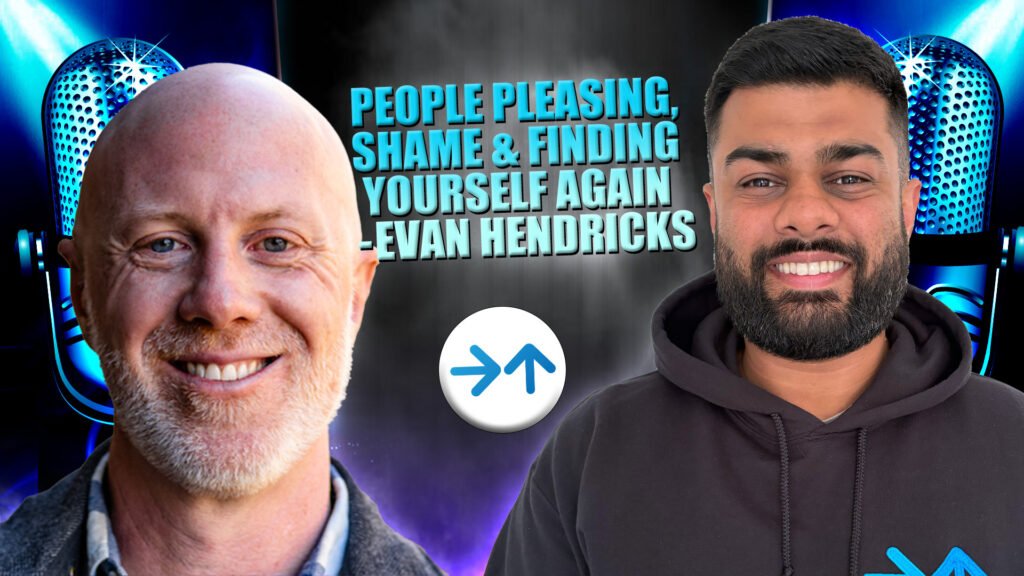
Ask most men who they are and they will usually tell you what they do. They will talk about their job, their responsibilities, their relationship, their role in the family or the people who rely on them. “I’m a project manager.” “I’m a husband.” “I’m a dad.” “I’m a provider.” Those answers are not wrong. They matter and for many men they carry deep pride and meaning but they are still roles and roles are not always the same thing as identity. A man can become very good at fulfilling responsibilities and still feel strangely disconnected from himself underneath them from the outside, his life may look stable enough. He is working, earning, showing up, carrying weight and doing what is expected of him but internally there can be a quieter question he rarely says out loud: what happened to the person I used to be before I learned how much of life depended on performance?
In the podcast conversation that inspired this article, Evan Hendricks described some of his earliest memories as “the picture of me before I became who I felt like I needed to become.” It is a powerful way of putting something many men feel but struggle to name. Evan grew up in a rural town in Oregon, in a culture that valued toughness, extroversion, sport, competition and a very specific kind of masculine presentation. He, however, was drawn to different things. He loved puzzles, origami, sketching, drawing, and reading. Even at recess, when the other kids were out playing, he wanted to sit on the steps with a book. There was nothing broken about that child. There was nothing deficient in his nature but he began to absorb the message that who he naturally was did not fit the version of boyhood his environment recognised and rewarded.
That message did not arrive only through one dramatic event. It came through repetition. It came through expectations at school, where high achievement was demanded. It came through sport, where participation was not optional and success carried social value. It came through religious culture too, where there were unspoken and spoken rules about how to speak, what to believe, and how to present oneself. Across family, school, community and church, the lesson was similar: adapt, perform, become legible to other people’s expectations. This is how many boys begin to lose touch with themselves. Not in one sudden moment, but gradually, through years of learning that approval comes more easily when they edit who they are.
One of the deepest costs of this process is not simply that a child changes his behaviour. It is that he begins to distrust his own inner life. Evan spoke about slowly disconnecting from his own intuition, discernment and desire. Instead of exploring who he was, he learned to study the people around him. What did they value? What impressed them? What earned approval? What avoided embarrassment? That shift matters. When a boy stops asking, “What do I enjoy?” and starts asking, “Who do I need to be to be accepted here?” he does not just become more agreeable. He becomes further removed from himself.
Many men still live by answers they created in childhood. They choose what looks respectable instead of what feels true. They suppress emotion because they learned it makes other people uncomfortable. They become highly competent at managing perception while becoming increasingly unfamiliar with their own needs from the outside, that can look like maturity. Often, it is adaptation.
At the centre of this pattern is a simple human need: belonging. Most boys are not consciously trying to betray themselves. They are trying to stay connected. They are trying to secure love, acceptance and safety in the environments shaping them. If fitting in feels safer than honesty, many boys will choose fitting in long before they have the language to understand what they are giving up in the process.
One of the strongest parts of Evan’s story is how specific it is. He remembers being the child on the T-ball mound crying, mortified, not wanting to be there, finally hitting the ball and then running to third base while everybody being cheered on. He remembers wrestling, which was deeply valued in his community, even though he hated it for three years he did not win a match. His Saturdays were spent driving long distances to tournaments, losing quickly, feeling humiliated, often crying from pain and from the simple fact that he never wanted to be there in the first place.
Then eventually he won and with that win came a rush. He saw the look on his parents’ faces. He saw pride, approval and affirmation. He realised he could become good at something he did not even love because of what it gave him emotionally. That is such an important insight, because many boys do not become performers out of vanity. They become performers because performance starts to feel tied to love, belonging, acceptance and safety.
Once that pattern is set early, it rarely stays confined to childhood. It grows into personality. It becomes a way of moving through the world. Evan spoke very openly about becoming a people pleaser and a chameleon, someone who learned to read the room, figure out what people wanted, and become that version of himself quickly. If achievement was valued, he could become highly achieving. If extroversion was rewarded, he could act extroverted. If a certain kind of confidence or capability was needed, he could provide that too.
On one level, that kind of adaptation can look impressive. It often creates men who are competent, flexible, hardworking and socially effective but there is a hidden cost to constantly shaping yourself around the needs and expectations of others. Eventually you can become so skilled at managing perception that you stop building any real relationship with yourself. You become highly legible to other people while becoming increasingly unfamiliar to yourself.
This becomes even more serious when it reaches marriage and intimate relationships. One of the strongest parts of the podcast is that it does not treat identity loss as an abstract self-development problem. It shows how it affects closeness. A man who learned early that love must be earned often carries that same logic into adult partnership. He keeps striving, performing, fixing, achieving and managing. He may pour enormous energy into work, competence, image or external validation while struggling to be emotionally present at home.
He may be constantly asking, without ever saying it directly, “Am I enough? Am I lovable? Am I safe here?” The problem is that performance can generate admiration without generating intimacy. A partner may appreciate how responsible or capable he is, but still feel the distance of not really being let in.
Evan spoke about how this showed up in his own marriage, where his wife could feel the gap between the energy he spent managing the outside world and the emotional closeness missing inside the relationship itself. That is one of the great tragedies of this pattern: a man can spend years becoming admirable while becoming harder to truly know. He can become excellent at being respected publicly while remaining emotionally unavailable privately, and those are not the same thing.
This is also why people pleasing is too often misunderstood. It is not just about being nice or agreeable. At a deeper level, it is often an attachment strategy. It is a way of securing belonging by staying useful, non-threatening, high-performing and emotionally manageable for other people. That may work for a while, especially in environments that reward compliance and competence but it creates strain over time. Relationships cannot thrive on a version of you that is always edited for approval. If you are constantly adapting to protect connection, then the very thing you most want to be known and loved becomes harder to experience, because the self being accepted is not fully the self you actually are.
The consequences do not stop at relationships either. When a man has spent years disconnected from his own emotional world, he often looks for relief elsewhere. Evan spoke candidly about the coping patterns that emerged in his own life, including workaholism, alcohol, and pornography. Those are not side issues. They are often downstream of a deeper fracture. When someone has learned how to function but not how to face himself honestly, he will usually find some way to numb, distract, or regulate what he cannot yet process directly. That is why it is too simplistic to say a man is fine just because he is still functioning. He may still be getting up, still earning, still carrying responsibility, still appearing strong but functioning and flourishing are not the same thing.
One of the most revealing moments in the podcast came in a conversation about desire. Evan mentioned how often men, especially fathers, are asked what they want and respond with “I don’t know” or “nothing.” That answer often gets laughed off but it points to something serious. Many men genuinely do not know what they want. Not because they are shallow or emotionally limited but because they have spent so long organising themselves around duty and expectation that desire has become unfamiliar territory.
If your inner life has been consistently deprioritised since childhood, then being asked what you want can feel strangely difficult. You may know what is needed, what is sensible, what is expected, and what will keep things running smoothly but knowing what feels alive, meaningful or honest to you is another matter entirely.
That is why one of the most hopeful ideas in the whole conversation is that healing is not always about becoming someone new. Sometimes it is about remembering. Remembering the parts of yourself that were real before they were edited for acceptance. Remembering what lit you up before everything had to be justified by productivity, status or usefulness.
In Evan’s case, that meant tracing himself back to the boy who loved books, drawing, quietness, and imagination. In Vishal’s reflections, it showed up in his love of motorbikes, the sound, the speed, the sense of freedom, the immediate feeling of being alive. Those moments matter because they remind us that what feels most true in us is often not destroyed, only buried. The self that got pushed underground is not necessarily gone. It may simply be quieter than the identities built for survival.
None of this means responsibility is the enemy or that masculinity itself is the problem. Responsibility, discipline, loyalty, courage and protectiveness are real virtues. Many men rightly take pride in being dependable and there is nothing wrong with that. The problem begins when those qualities are built on emotional suppression rather than self-knowledge.
A man is not stronger because he has become numb. He is not healthier because he can endure misery in silence. He is not more mature because he has forgotten how to play, rest or speak honestly about what hurts. Real strength has more to do with truthfulness than invulnerability. It includes the ability to look at the life you have built and admit when, despite appearances, something in you feels lost.
In that sense, the question is not whether a man can continue performing. Many men can do that for a very long time. The better question is whether he can bear to stop performing long enough to find out who he is without the role, without the mask, and without the constant management of how he is perceived. That is harder than it sounds, especially for men who learned young that their belonging depended on getting it right but it is also where genuine reconnection begins.
The man he is looking for may not be a brand-new version of himself. He may be the one who existed before approval became the price of acceptance. The one who loved what he loved without shame. The one who had preferences, sensitivity, curiosity and joy before those things were trained into more acceptable shapes.
That is why the central message of this piece matters. Many men do not need to invent themselves from scratch. They need to recover a relationship with the self they abandoned in order to survive, succeed or belong. They need to ask not only what they do but who they became in the process of trying to be loved. They need to examine the distance between being admired and being known and they need to consider that the disconnection they feel in marriage, in work or in their own inner life may not be a sign that something is wrong with them, but a sign that they have spent too long living at a distance from what was always real.
If you prefer listening over reading, you can hear the full conversation on the Onward Shift Podcast.
 Listen to the episode here:
Listening in your van, on-site or on a walk can sometimes land harder than words on a screen.

Linkedin – https://www.linkedin.com/in/evan-hendrix-b350a22b2/
Website – https://www.evanhendrix.com/

Workplace safety is often viewed in terms of compliance and statistics. However, behind every workplace accident is a human story often one of pain, perseverance

Construction Workers Deserve Dignity, Not Judgement There is something we need to talk about in construction, and it has nothing to do with productivity targets,

There is a construction company somewhere with a mental health policy on its shared drive, a poster in the canteen, an employee assistance programme mentioned

Ask most men who they are and they will usually tell you what they do. They will talk about their job, their responsibilities, their relationship,

There is a particular kind of tiredness that comes from knowing exactly how the next day will feel before it has even started. The same

In the construction industry, where the focus traditionally lies on physical safety, productivity and project delivery, mental health has often been a neglected topic. However,
If you’re feeling overwhelmed or need someone to talk to, there are organisations that offer free, confidential support for mental health challenges, especially for professionals in high stress industries like construction and engineering. Here are some options available:
Provides a 24/7 confidential listening service for anyone struggling with their mental health or in distress.
A free and confidential text-based crisis support service available 24/7.
The Lighthouse Construction Industry Charity provides vital support to construction workers and their families, offering financial assistance, mental health support, and occupational health advice.
Mates in Mind works to improve mental health awareness within the construction sector. They provide training and resources to help businesses and workers address mental health challenges.
B&CE’s Construction Worker Helpline offers free support and guidance for industry workers facing financial difficulties, stress, or personal challenges. Available from 8am-8pm, 7 days a week.
Provides confidential advice and financial assistance for people working in the electrical industry.
The Rainy Day Trust provides financial assistance and support to those working in the home improvement, construction, and allied trades industries.
CRASH helps homelessness charities and hospices by providing construction-related assistance, offering expertise and materials for vital building projects.
This organisation helps young people discover career opportunities in the construction industry, breaking down stereotypes and offering pathways into the trade.
Offers emotional support and guidance for anyone affected by bereavement.
Provides 24/7 support for individuals struggling with gambling-related issues.
At AA, alcoholics help each other. We will support you. You are not alone. Together, we find strength and hope. You are one step away.
A free listening service for individuals experiencing suicidal thoughts, open from 6pm to midnight daily.
A helpline offering support and information to LGBTQIA+ individuals on topics like mental health, relationships, and identity.
Provides young people with advice and support on topics such as mental health, finances, relationships, and homelessness.
The construction industry can be both rewarding and challenging but no one should have to face difficulties alone. Whether you need financial help, mental health support or career guidance, these organisations are here to assist you. If you or someone you know is struggling, don’t hesitate to reach out. If you found this list helpful, consider sharing it with colleagues or on social media to spread awareness. Let’s build a stronger, healthier construction industry together!

Helping construction, one conversation at a time.
Helping construction, one conversation at a time.
We use cookies to make our website work properly, improve performance and personalise your experience. You can accept all cookies or manage your preferences.