To every construction worker reading this, whether you’re on the tools, managing a site, working nights, running a gang, leading a project, supervising a team or simply trying to hold everything together, this letter is for you. Not the polished version of yourself that people see online. Not the version that automatically replies “I’m fine” when somebody asks how you’re doing. Not the version that has learned to hide stress, pressure or exhaustion because that’s what you’ve always done. This letter is for the real you. The person who has reached the end of another year carrying responsibilities, solving problems and continuing to show up even when life has felt difficult. As 2025 comes to a close, I wanted to take a moment to acknowledge something that often gets overlooked within our industry. You made it through another year. That might sound simple but when you stop and reflect on everything you’ve faced, everything you’ve carried and everything you’ve overcome, it deserves recognition.
2025 Wasn’t Easy Let’s Be Honest About That
Construction has never been an easy industry to work in but it feels like each year brings a new set of challenges. The physical demands alone can be enough to wear people down. Early starts, long commutes, harsh weather, demanding clients, changing programmes, labour shortages, rising costs and relentless deadlines all create pressure that many people outside the industry will never fully understand. Yet for most workers, the physical side of the job isn’t actually the hardest part. It’s everything else that comes with it.
What people don’t see is the mental load that construction workers carry every single day. They don’t see the worries you take home after work. They don’t see the sleepless nights spent thinking about money, family responsibilities, upcoming projects or problems that still haven’t been solved. They don’t see the pressure of being the person others rely on. They don’t see the emotional weight of trying to hold everything together when you feel like you’re struggling yourself. Construction workers are often expected to be problem solvers, providers and leaders, not only at work but within their families and communities too. That’s a lot for any person to carry.
The truth is that many people have spent 2025 simply trying to keep their heads above water. Some have faced financial pressures. Some have dealt with relationship difficulties. Some have experienced grief and loss. Others have struggled with their mental health in silence because they didn’t feel comfortable speaking about it. While every person’s experience has been different, there is one thing that connects us all. Life has tested us this year. It has challenged us, stretched us and forced us to adapt. If you’ve reached the end of 2025 feeling exhausted, that doesn’t mean you’ve failed. It probably means you’ve been carrying more than most people realise.
The Hidden Challenges Nobody Talks About
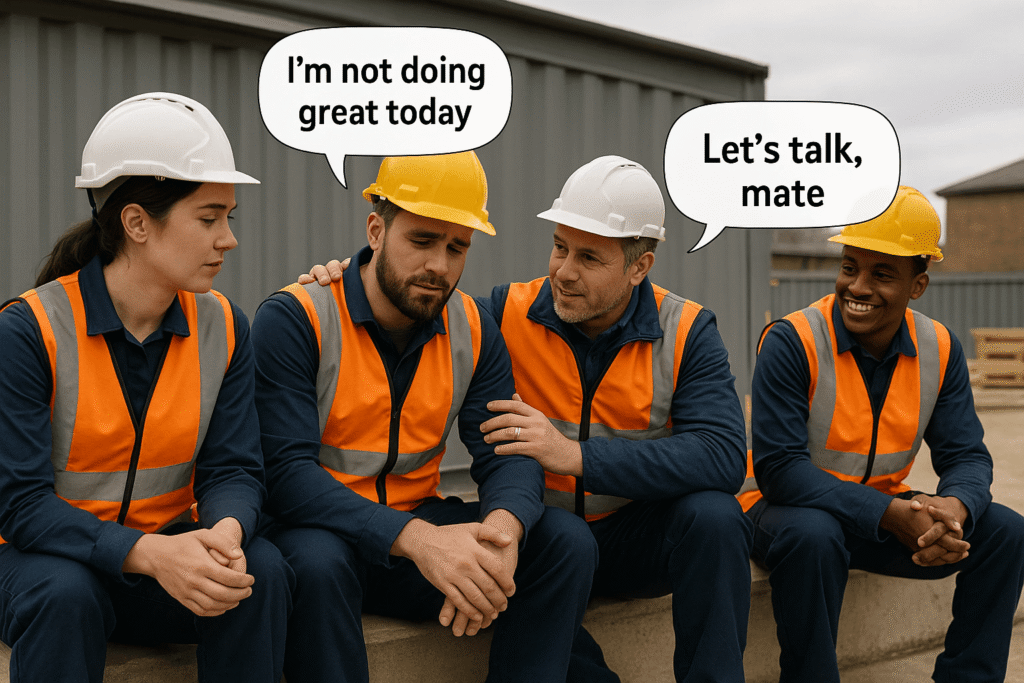
One of the strangest things about construction is that we spend so much time working alongside one another, yet many of us have no idea what the person standing next to us is going through. We know what tools they use. We know what trade they work in. We know whether they support West Ham, Arsenal or Liverpool but we often know very little about what’s happening beneath the surface.
Every construction worker has a life beyond the site gates. Some are raising children. Some are caring for elderly parents. Some are dealing with relationship breakdowns. Some are worrying about debt. Some are navigating mental health challenges. Some are carrying trauma from experiences that happened years ago. Some are battling loneliness despite being surrounded by people every day. The difficult part is that many of these struggles remain hidden because our industry has traditionally rewarded toughness and self-reliance.
There is nothing wrong with being resilient. In fact, resilience is one of the qualities that makes construction workers extraordinary. The problem occurs when resilience becomes emotional suppression. Somewhere along the line, many people learned that being strong meant dealing with everything alone. They learned that asking for help was a sign of weakness. They learned that talking about emotions was uncomfortable, unnecessary or something to be avoided altogether. The result is that countless workers continue carrying burdens that would feel lighter if they simply shared them with somebody they trust.
The reality is that every single person has moments where they struggle. Every single person experiences self-doubt, fear, uncertainty and stress. That’s not a sign that something is wrong with you. That’s part of being human. The strongest people are not the ones who never struggle. The strongest people are the ones who acknowledge when they’re struggling and take steps to support themselves through it.
This Year Changed You More Than You Think
One thing I’ve learned throughout my own journey is that growth rarely feels like growth while it’s happening. Most of the time it feels frustrating, uncomfortable and exhausting. It feels like making mistakes. It feels like dealing with setbacks. It feels like questioning yourself and wondering whether you’re making progress at all. Yet when you look back over a longer period of time, you often realise how much you’ve changed.
Think about the person you were twelve months ago. Think about the experiences you’ve had since then. The conversations. The challenges. The lessons. The disappointments. The successes. Every one of those experiences has shaped you in some way. Even the difficult moments have contributed to your development. In fact, they are often the moments that teach us the most.
Perhaps this year showed you that you’re stronger than you thought. Perhaps it taught you the importance of protecting your energy. Maybe it helped you recognise who truly supports you and who doesn’t. Maybe it forced you to slow down and reassess your priorities. Maybe it encouraged you to have conversations you’ve been avoiding. Whatever your experience has been, there is a good chance that 2025 has taught you lessons that will serve you for years to come.
The challenge is that we often overlook our own growth because we’re too focused on what’s next. Construction workers are particularly guilty of this. We complete one project and immediately move on to the next. We solve one problem and another appears. We achieve a goal and immediately raise the bar. While ambition is important, so is reflection. Before you rush into 2026, take a moment to appreciate how far you’ve come. Give yourself credit for the obstacles you’ve overcome and the person you’ve become along the way.